Ajinkya Rahane: A Test career where the figures understate the impact

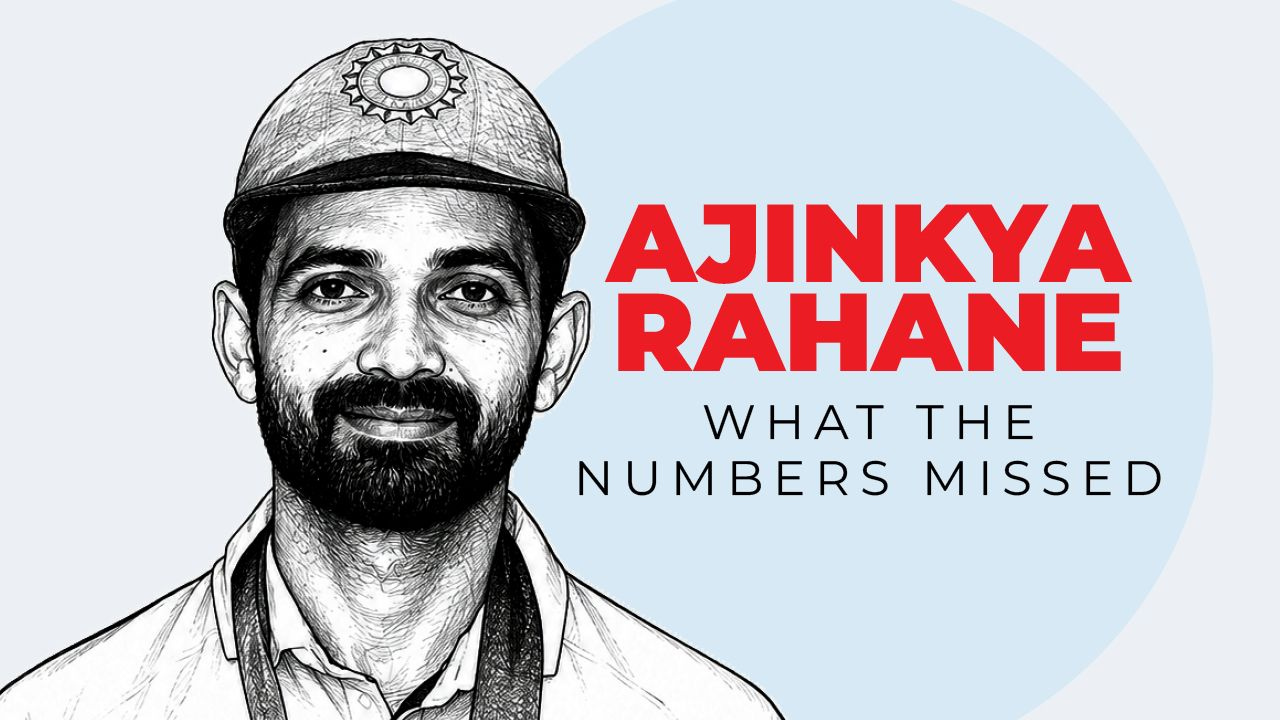
Ajinkya Rahane's Test record presents a notable numerical contradiction: his career batting average stands at 38.46, a mark that places him short of the game's top-tier averages, yet the raw totals do not capture the full measure of his contributions. Beyond simple aggregates, Rahane produced crucial performances away from home, stepped up in pressured moments and had a hand in several landmark wins.
Rahane's time in the Indian Test side is best described as one in which statistical summaries tell only part of the story. While the 38.46 average is the headline figure, his reputation has been shaped by innings played under difficult conditions and by performances that mattered at turning points. Observers who focus solely on aggregates risk overlooking episodes of leadership and tempering influence on team results. The piece takes a data-oriented view to explain why conventional metrics do not fully account for his value.
The batting average of 38.46 does not align with perceptions of frontline international batsmen, and that disparity is central to the narrative surrounding Rahane. Numbers alone suggest a player below elite peers; yet those figures omit context such as match situations, conditions, and the relative weight of particular contributions. Identifying the limits of aggregate statistics is a central task in reassessing what the record signifies.
Rahane's performances away from Indian soil form a crucial strand of his legacy. Descriptions of him as someone who "thrived overseas" reflect a pattern of producing useful and sometimes decisive innings in unfamiliar settings. That tendency complicates any simple reading of career averages, because impact often came in environments where runs are harder to come by and match situations more exacting.
Equally important to Rahane's standing are his displays in high-pressure phases of matches. Accounts note that he "delivered in crises and played defining roles in historic victories," and those particular innings carry disproportionate influence on team fortunes. Such match-defining contributions resist easy quantification in season-long or career-long aggregates but remain central to evaluating a player's significance.
By using statistical review alongside situational context, the assessment builds a case that Rahane's influence stretches beyond what traditional metrics capture. The approach underscores that raw numbers are only one lens through which to view a Test career and that context can materially alter the interpretation of those numbers.
Rahane's Test record, anchored by an average of 38.46, therefore invites a wider appraisal than aggregates permit. When his overseas successes, crisis performances and role in key wins are taken into account, his legacy emerges as more substantial than a glance at statistics might indicate.