Alan Jones, 1981 Formula One world champion, dies aged 80

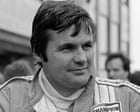
Alan Jones, the Australian Formula One driver who won the 1981 drivers’ title with Williams, has died of cancer aged 80, his obituary published on 8 November 2026. He finished his career with 12 grand prix victories and rose to prominence through the Williams FW07 and its FW07B successor.
Jones secured the 1980 drivers’ crown after a season in which he won five races and recorded five other top-three finishes, exploiting the ground-effect performance of the FW07 and FW07B. That 1980 title made him the first Williams driver to claim the drivers’ championship and delivered the team its first constructors’ championship; Williams repeated as constructors’ champion in 1981, Jones’s final season with the team. The only other Australian to win the drivers’ title was Jack Brabham, who won three times between 1959 and 1966.
Although 1980 provided his sole world championship, many observers and fellow drivers regarded Jones as arguably the best driver on the grid at the start of the 1980s amid rivals such as Nelson Piquet, Carlos Reutemann and Alain Prost. The F1 commentator Mark Hughes described him as: “Strong like an ox, psychologically more airtight than anyone who’s ever climbed into a race car, and the most aggressive wheel-to-wheel racer who scared the living daylights out of his rivals.”
Jones recalled being summoned to Ferrari’s Maranello headquarters in 1978 and meeting Enzo Ferrari in dramatic fashion: “they ushered me into the presence of this white-faced figure with dark glasses, and my first thought was, ‘He’s dead. They’ve propped him up and they’ve got a recording of his voice coming from behind a curtain.’” Ferrari signed a contract on the conditional understanding that Mario Andretti might be preferred to boost sales in North America; the team instead chose Gilles Villeneuve, a decision Jones later said had done him “the biggest favour of my life.” He also praised Frank Williams, saying: “Frank is the best bloke I ever drove for, because he was such a great motivator. He could make you walk over glass.”
Born in Melbourne, Jones came from a racing family: his father Stan Jones won the New Zealand Grand Prix, the Australian Drivers’ Championship and the Australian Grand Prix, and operated a chain of car dealerships. Stan and Alan are one of three father-son pairings to have both won the Australian Grand Prix. Stan separated from Alan’s mother Alma when Alan was 12, taking custody; Alan attended Xavier college and began hill-climb events at 16 in a Mini before moving to Europe after his father’s businesses failed.
In Europe Jones lived in Earl’s Court, worked a series of odd jobs, and raced at lower levels with Brian McGuire until breaking a leg in testing at Brands Hatch. By 1971 he was competing in Formula 3, finished second in the 1973 F3 championship driving for GRD after trials with March, and progressed through Formula Atlantic and Harry Stiller’s F5000 operation before signing to drive the Hesketh Formula One car.
Jones made his F1 debut at the 1975 Spanish Grand Prix at Monjuïc, an event at which four people died after Rolf Stommelen’s car left the circuit. He was later hired to replace the injured Stommelen on Graham Hill’s team and finished fifth at the German Grand Prix at the Nürburgring, though he said of Hill: “He was stubborn and inflexible. A great ambassador for motor racing, but a wretched man to work for.” In 1977 he joined Shadow to replace Tom Pryce, won the Austrian Grand Prix, and ended the season seventh with 22 points; soon after that season Brian McGuire was killed in a Brands Hatch accident and Jones was contacted by both Williams and Ferrari.
Jones’s 1981 swansong with Williams produced third place in the drivers’ championship, victories at Long Beach and Las Vegas—the Las Vegas win being his 12th F1 victory—and four further podiums, after which he announced his retirement aged 34 following Las Vegas. He returned for a single race with Arrows in 1983, then joined the Beatrice-Haas team for 1985–86; the car lacked competitiveness and he clashed with team manager Teddy Mayer, saying: “There’s ways to get the best out of drivers, and he found out how not to get the best out of me,” which effectively ended his Formula One career.
Outside Formula One Jones raced at Le Mans in 1984, won a round of the All Japan Touring Car Championship in 1987, finished third in the 1988 Bathurst 1000 and drove for teams run by Tony Longhurst and Glenn Seton. From 1987 to 2002 he was part of Channel Nine’s Formula 1 commentary team, forming a popular double act with Barry Sheene, and he became an F1 commentator on Network Ten in 2013. His first marriage ended in divorce; he married Amanda Butler-Davis in 2002, and she survives him along with six children.