Andy Burnham restates personal view on alcohol in football stands amid scepticism

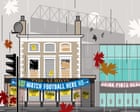
Prime Minister Andy Burnham this week restated his personal view that alcohol should be permitted in the stands at football, framing the remarks as a private opinion rather than a government policy proposal. The comments have been, as the column puts it, sliced and diced and generally dismissed.
Burnham, described in the article as a life-long football fan, has used informal channels such as videos on his LinkedIn page to project his public persona. The piece argues he is performing two roles: a public-facing cover job to avoid reflexive political hostility, and a separate layer of substantive politics that would be delivered more quietly. In that context the drinking-in-stands remark is presented as ambient electioneering rather than an actionable plan.
The column labels the proposal a dead issue and stresses it is a restatement of a long-held personal opinion, not an intention to change law or policy. It notes that alcohol has been banned within sight of the pitch since the late 1980s, and adds that there are strong practical reasons for that prohibition. The author concedes a personal fondness for drinking, writing "I love drinking. I'm a fan, a cheerleader, a devotee," but argues the country has larger problems than access to alcohol at matches.
A series of practical objections is set out: the article cites a figure that the average urban centre has 60 booze outlets per square mile and suggests people who really want to drink can smuggle in a flask. It also states "Young people also don’t really drink" and that many potential new supporters, "women in particular, feel doubly uncomfortable around a pissed-up football crowd." The column further warns that once re-legalised, "within three minutes of re-legalising this, someone somewhere is chucking a pint in the air."
Economic and social consequences for pubs are emphasised as a key objection: the author argues reintroducing alcohol to stands would help to close down pubs and "shovel money instead into the pockets of clubs owned by hedge funds." The piece describes pubs as a vital "third space" around grounds and supplies local pub counts: "there are 174 active pubs within a one-mile radius of St James’ Park. Molineux has 50 pubs, Portman Road 29. Arsenal 33." It also notes that "When Andy Burnham sits down at Everton with Mark Carney and feels annoyed he can’t buy a £9 Peroni, he is also just a 15-minute walk from 23 public bars that survive purely on selling liquid to thirsty people."
The article places the episode in a wider cultural and political frame, arguing Burnham chose booze and football as an intentionally tribal issue and that this line of thought is rooted in a 1980s-style understanding of football culture. It states the police do not want the change and repeats that Burnham was merely re-sharing a personal view. The columnist characterises Burnham as "a Blair-era spad who will be 57 in January, the same age as Jacob Rees-Mogg and Woodstock."
The column concludes that the proposal is unlikely to proceed and that the public reaction to this non-issue is informative about Burnham's reflexive thinking, ending with the line: "The response to that slight false note, a wider head-scratch over what is essentially a non-issue, is useful information. Time for a drink and a rethink."

