Asian Champions Trophy faces overhaul as India dominates in Jalandhar


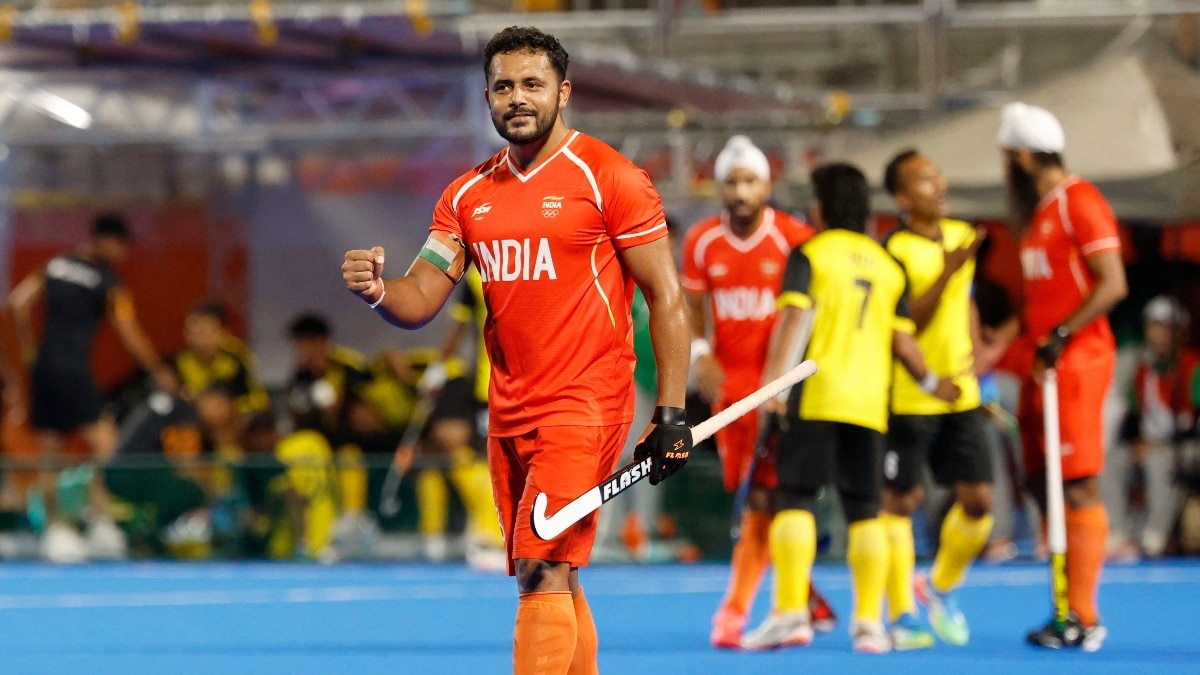
Halfway through the men’s Asian Champions Trophy in Jalandhar on October 31, 2026, India have opened up a clear gap over the other participants, prompting questions about the tournament’s relevance and structure. Photographs from the event show Indian players celebrating their win over Japan.
The competition was conceived and launched in 2011 to give Asian teams regular high-level competition, but continental standards have slipped on the world stage since then, a decline visible in world rankings. At the end of 2011 three Asian sides were inside the top 10 — Korea (6), Pakistan (8) and India (10) — while Malaysia (13), Japan (15) and China (17) trailed closely. A year later Pakistan moved into the top five, with Korea and India among the continent’s highest-ranked teams.
More recent rankings, however, show a contraction of Asian representation near the top: the latest table (as of Saturday) lists India (8) as the only Asian nation in the top 10, a situation that has held for several years, followed by Pakistan (12), Malaysia (13) and Japan (16), with Korea at 20. Since the tournament’s inception, India has been the only Asian side to qualify for all four Olympic editions; Pakistan’s 2012 appearance came via its 2010 Asian Games win, Japan participated in 2020 as host, and Korea last featured at the quadrennial showpiece in 2012.
The scale of India’s dominance at this edition has revived debate about what purpose the Asian Champions Trophy now serves, especially for the host nation. The gap on the turf has prompted organisers, coaches and observers to question the event’s place in an already crowded calendar and whether it delivers meaningful competition for the continent’s leading side.
“It’s really difficult to place it somewhere where it has meaning when you’ve just played Asian Games against the same people, so it is difficult,” coach Craig Fulton admitted. He prefaced that observation by saying, “Well, I see this tournament as possibly a building phase for certain teams.”
One proposal floated to boost competitiveness is to expand the field beyond Asia, converting the ACT into an Afro-Asian or Asia-Oceania event and increasing participants from six to eight or 10 teams. Proponents argue such an expansion would attract stronger opposition and would align with Hockey India’s stated plans to spread international hosting to different parts of the country.
Organisers and officials have been pressed on possible reforms and calendar adjustments, but Hockey India secretary general Bholanath Singh, who also serves as an AHF vice-president, did not respond to queries despite repeated attempts. Tournament stakeholders say the competition’s format, timing and broader role within Asian hockey require reconsideration.
Among the concrete options under discussion is expanding the tournament to eight to 10 teams and opening entries beyond Asia to restore competitive balance; implementing such a change would directly affect the ACT’s composition and Hockey India’s hosting strategy for future international events.