Beauden Barrett’s 150th cap ends in heavy Twickenham defeat for All Blacks

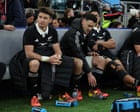
Beauden Barrett’s 150th-cap appearance ended in a comprehensive defeat for New Zealand against England at Twickenham on 21 November 2026. The loss followed head coach Dave Rennie’s public rebuke of the squad and represented the All Blacks’ worst Twickenham display of the professional era and a record defeat by England.
Barrett was given a bespoke entrance and knelt to rub the turf before kick-off; his first touch was to kick the restart after Henry Slade’s opening try and thereafter he was largely a bystander. At 35, this was his 12th match against England, his third defeat to them and by far his most comprehensive reverse. He reached 150 caps, becoming only the fourth man to do so; he made his debut in a 60-0 win over Ireland in 2012 and was world player of the year in 2016 and 2017, though the piece notes his powers are waning.
Dave Rennie’s earlier public criticism preceded the defeat and, the article says, “With hindsight, it is clear what Rennie was trying to do, but his comments say much about the All Blacks’ problems.” When Rennie apologises he does so to an increasingly apathetic New Zealand public, the report adds.
Credit was given to England, described as utterly inspired and producing their best performance of the Steve Borthwick era; when they hit their stride under Borthwick they were suffocating and soon had the All Blacks gasping for air. New Zealand were repeatedly unsettled by England’s line speed and outclassed by their backs; the All Blacks were hesitant in possession, their handling was described as shocking and “rabbits in headlights.” Will Jordan inexplicably dropped the first time New Zealand managed to put the ball through the hands, their lineout was poor in the first half and “in the second, it went to pieces,” and Damian McKenzie’s place-kicking was labelled dreadful.
The report lists mitigating factors: the match came near the end of a gruelling season, Rugby’s Greatest Rivalry was New Zealand’s No 1 priority and a colossal series had taken its toll. The squad had significant absences, with “half a team, including their talisman Ardie Savea, on the injury list,” and, the article notes, at the time of writing they could still end up winning this competition.
There is commentary on a longer-term decline: the aura that once surrounded the All Blacks, the piece argues, “disappeared long ago,” and New Zealand “do not instil fear like they did a decade ago.” The team have slipped to fifth in the world, their joint-lowest ranking, and the report recalls that last year’s dismal Twickenham performance cost Scott Robertson his job; this result was judged to be even worse.
Barrett’s instinct for timing offered one flash of the old game when he burst on to Cam Roigard’s offload to produce a moment of nostalgia. When McKenzie converted, New Zealand were back to within 12 points with around 25 minutes remaining, but the article concludes that you never sensed a realistic comeback and that any belief had been battered out of the All Blacks by that stage.
If New Zealand are to recover next weekend they must make marked improvements in the space of a week that were beyond them in the buildup to this defeat. The report adds that they will welcome their injured cohort back for next year’s Rugby Championship and will be a formidable force at the World Cup.