Big red speaker, Louis Vuitton trunks and a tattoo wager mark Spain’s World Cup celebrations

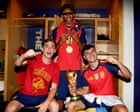
Luis de la Fuente’s team was the best at the tournament by some margin but are not satisfied yet with focus now on ‘the next game in September’. Spain’s triumph in the final produced exuberant scenes that mixed high-end trophy accoutrements with more spontaneous, personal moments among the players.
Memories of 2010 and the 2026 victory threaded through the celebrations. Rodrigo Hernández had been 14 when Andrés Iniesta struck the winning goal in the 116th minute of the 2010 final; at that time he was canoeing in the Connecticut woods and later watched the match alone on a mini-laptop in a staff hut before running laps of the lake after the finish. Sixteen years on, Rodrigo was back in the United States, not far from that scene, when Ferran Torres scored the decisive goal in the 106th minute of this final. He reacted by running towards the corner where his other family were, and when the match concluded he collected the trophy, pausing just long enough for Donald Trump to leave centre stage before lifting it, his timing perfect even here.
The immediate aftermath combined carefully curated moments with improvised celebration. Luxury elements such as Louis Vuitton trophy trunks and a conspicuous big red speaker appeared alongside more intimate rituals among team members. Players and staff moved between formal trophy-handling duties and private exchanges, creating a contrast between the public presentation of the cup and the informality of a squad release valve.
Personal narratives punctuated the team’s joy. Rodrigo’s two-decade arc from a teenager watching the 2010 final to a central figure in the 2026 victory exemplified the continuity within Spain’s generation of players. The squad’s reactions ranged from exuberant dashes towards family to quieter, composed trophy-lifting moments, underscoring both relief and elation. A tattoo bet, referenced among the festivities, added a note of playful permanence to the evening without overshadowing the collective achievement.
Though the celebrations were vivid, a sense of measured purpose remained within the camp. The coaching staff and players presented themselves as aware that the tournament win, however comprehensive, is part of a larger programme rather than an endpoint. That stance was reflected publicly in the insistence on maintaining standards and preparation beyond the immediate celebrations.
Physical symbols of victory and the club-like atmosphere off the pitch captured the tone of the night: trunks, speakers and informal wagers shared space with the trophy itself. The juxtaposition of ceremonial pomp and locker-room informality illustrated how the squad balanced public triumph with private camaraderie. For many players, the evening provided both a culmination of years of work and a reminder of the routines and relationships that produced it.
Spain’s win will be remembered for its decisive moments and the human stories woven through them, from a teenager’s solitary viewing in 2010 to the same player hoisting the prize in 2026 after Ferran Torres’s 106th-minute strike. Yet the team’s own framing of the achievement — captured in their continued focus on future fixtures — suggests the celebrations are a waypoint rather than a finishing line.