Billy Meredith: at the centre of Manchester City’s 1906 scandal and later honoured by United

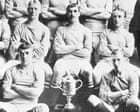
Billy Meredith was the central figure in Manchester City’s illicit payments scandal in English football that culminated in 1906, a case that prompted the Guardian’s contemporary headline “FOOTBALL SENSATION – MANCHESTER CITY’S GRAVE OFFENCES – HEAVY PUNISHMENTS.” The episode involved allegations of under-the-table payments at City and a high-profile suspension for Meredith.
Manchester City had won the FA Cup in 1904 but began to unravel after the final day of the 1905 season, when City lost to Aston Villa in a match that involved punches and mud-slinging and in which Meredith was alleged to have offered a £10 bribe to Villa captain Alec Leake to throw the game. A mysterious spectator reported the incident, and Meredith was suspended for a season; his continued presence around the club during that suspension prompted a fresh FA probe into City’s finances.
The FA investigation found gate receipts were being diverted into directors’ private accounts and that players were receiving off-the-books payments; Meredith was receiving £6 a week when the maximum wage was £4. The inquiry resulted in 17 players being banned from playing for City again and two directors being banned for life.
The sanctions had competitive consequences: the club slipped down the table, were relegated three years later, and did not win the league title again until 1937. The 1906 case is presented in the article as evidence that such punishments can have long-term effects on a club’s fortunes.
Meredith later attracted arguments that he had been unfairly targeted for his involvement in attempts to set up a players’ union and his campaigning for abolition of the maximum wage; the article describes him as a wiry winger of notable ability. David Lacey is quoted as describing Meredith as ranking “with that of Stanley Matthews in the history of the British game,” and the piece notes that when Manchester United fans voted Eric Cantona their greatest player in 2001, Lacey suggested that earlier decades might have produced George Best and before that Meredith himself.
Meredith’s career included spells at City from 1894 to 1905 and again from 1921 to 1924, and he is recorded as being in Manchester United’s hall of fame. When he played in the Manchester derby in 1910 the Guardian’s man on the ground wrote: “Both sides tried hard, no doubt; there was no shirking to speak of,” and added that “The teams might have represented Penzance and Berwick-on-Tweed respectively for all the evidence the play gave to the contrary,” after United had won 2-1. The correspondent also questioned whether contemporary professionalism allowed sustained local patriotism, asking: “Is it reasonable to expect local or even club fervour in professional football as it exists today? Can local patriotism thrive under a red jersey this year, a blue one the next, and perhaps a white one after that? It does not seem likely.”
Meredith played international football 51 times, continued playing until he was 49, and retired four months before his 50th birthday to take over a pub; he was nicknamed “old skin” and famously played with a toothpick in his mouth. The article recalls an incident during the Manchester blitz when a bomb exploded at the back of his pub and a shower of Welsh international caps scattered across the neighbourhood.
Meredith is quoted on the origins of City’s success and the wider lesson: he said the club had “put aside the rule that no player should receive more than £4 a week” and admitted: “Clubs are not punished for breaking the law – they are punished for being found out.” The piece concludes by noting, without additional editorialising, that this observation “applies as much to 2026 as it did all more than a century ago.”