Can anyone end Manchester United’s ‘doom loop’?

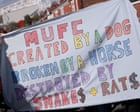
On October 28, 2026, Manchester United’s ongoing crisis at Old Trafford was laid bare, with the club’s instability prompting questions about whether any manager — including Eddie Howe, Julian Nagelsmann or Mauricio Pochettino — can arrest a decline blamed on executive chaos and an unfit, uneven squad.
The club’s problems are traced to institutional changes after the Munich air disaster era, when Louis Edwards joined the board a day after the crash and later passed control to his son Martin, who floated the club for personal gain. That conversion into a shareholder‑driven business, the sale to the Glazers with the purchase price and interest transferred onto the club, and Alex Ferguson’s fraught relationship with directors are cited as structural shifts that left United vulnerable to acquisition and financial engineering.
Recent ownership and executive decisions are criticised for alienating supporters and reshaping matchday access, while the leadership style of later owners and executives is described in the article as operating by a so‑called “Boris principle,” appointing people who lack the requisite ability and character. The piece singles out Jim Ratcliffe with sharp language about his rhetoric and decisions, and argues that promised “best in class” executives have not materialised, producing a leadership culture the author views as chaotic and self‑serving.
A repeating operational cycle is outlined: missing Champions League qualification leads to constrained spending; an ill‑matched manager is appointed and spends heavily on players deemed below the requisite standard; qualification is occasionally achieved via an unsustainable style; the manager is then denied funds (less than the Champions League bounty, the article says); proactive methods are implemented without appropriate personnel; the manager is fired for a fee that exceeds savings from job cuts; and the sequence restarts with another unsuitable appointee amid absent executive accountability.
Michael Carrick’s continued tenure as manager is presented as emblematic of this dysfunction: he remains in place despite perceived shortcomings, with suggested reasons including hopes of a turnaround, reluctance to pay him off, lack of executive consensus on a replacement, and the implication that sacking him would force executives such as Omar Berrada and Jason Wilcox to face consequences themselves. The article also criticises failures to recruit properly and to replace departing fitness and set‑piece coaches.
On‑pitch troubles are summarised as a lack of fitness, weak collective mentality, a captain who has “finally broken,” and players who “hate the suits,” creating what the author calls a toxic package. The piece sets out five core demands of modern football management — coaching, tactics, talent identification, pastoral care and presence — and assesses potential candidates against those criteria, noting concerns about Unai Emery’s fit given his record at two high‑profile clubs, Eddie Howe’s apparent lack of the necessary presence, and Antonio Conte’s poor spell at Spurs.
The article highlights talent identification as crucial, citing that of the 78 players bought after Ferguson’s departure only Bruno Fernandes and “perhaps Zlatan Ibrahimovic” are viewed as cast‑iron successes. It references the appeal of figures such as Mauricio Pochettino, who “built something at Tottenham despite the environment,” and Julian Nagelsmann, while noting Pochettino has signed a new contract with the USA men’s team. It also says Jürgen Klopp benefitted from a transfer department that delivered an exceptional run, and that Ed Woodward’s actions harmed United by turning Klopp away.
The central question posed is whether anyone can manage a club beset by entrenched failures; the article concludes that failure at United has multiple origins but that, despite the depth of problems, the club still has the resources to attempt recovery — asking finally, “Even the longest journey starts with one step; but does anyone have the nous to ensure it’s taken in the correct direction?”