Charles ‘Peanut’ Tillman on leaving the Bears for the FBI and coaching flag football in Liverpool

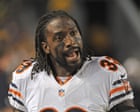
Charles ‘Peanut’ Tillman, the former Chicago Bears defensive back, discussed his transition from the NFL to eight years in the FBI and his summer coaching flag football in Liverpool in an interview published on 15 September 2026. He spoke about his playing career, time as a federal agent and why he returned to work with young players in England.
Tillman played 168 games for the Chicago Bears across 13 NFL seasons and acquired the nickname “Peanut” from his mother as a child; he became known for the defensive technique widely referred to as the Peanut Punch. After retiring from the NFL he spent eight years with the FBI before leaving over “the Trump administration’s ICE policies and tactics.” Now 45, he spent part of the summer in England teaching flag football to children in Liverpool.
He described a peripatetic childhood in which he attended a dozen schools around the world and said those experiences shape how he coaches. “Absolutely. I share a great deal because it helped shape me into the person I am today. My dad being in the military and us moving around so much helped my personality. I’m very outgoing and a lot of that stems from my childhood, always being the new kid in school and having to make new friends. So, I talk about those experiences with the kids when it feels appropriate,” Tillman said.
Asked whether he had to force himself to be outgoing in new settings, he replied: “No, when I tried to make friends or meet new people, it came from a genuine place. I looked at it as another adventure: ‘Oh, wow, I’ve never been to this country or this state before. Let’s learn about northern California. Let’s learn about West Germany.’ I had a chance to see different cultures and how people lived. ‘OK, this is what they do in Texas. This is how they do it in Louisiana’. I was pretty well rounded. And it made me comfortable being around so many different cultures and ethnicities. I loved it.”
On language and international games he said: “Not good. When I lived there, I could speak a little, because they taught us it in school and I was young, so my brain retained it. The most German I see now is subtitles in a movie. I haven’t been to any of the NFL International Games in Germany yet. But I’ve been to Toronto and Tottenham – and I played at Wembley!”
Explaining why he settled in Chicago, Tillman pointed to the city and its supporters, saying: “The food! And the people more than anything. When you’re in Soldier Field, and it’s freezing cold, six degrees Fahrenheit, they’re third and two, and you’re on the goal-line and you look up in the stands, and you want our fans to scream and yell more – and they do – there’s no greater feeling. That was why I stayed. I loved playing in Chicago. I loved our defence. I loved everything about the city. I love the history, that it was one of the original teams, but more importantly the people. We haven’t won any championship since 1985, but we still have some of the most loyal fans, and they’re waiting. I can’t say patiently, but they’re definitely waiting.”
On preparing for a post-football career he said he had quietly prepared for the FBI while still playing and accepted the standard vetting process: “Once I knew I was done playing, I knew the process would take a little bit of time, with background checks and all the polygraphs. So I’d been quietly preparing for my time in the FBI for about two years, just living my life. I’m not going to say ‘keeping my nose clean’ because I keep my nose clean every day. I didn’t have to do anything special or different. I just waited until I got a call to go to the academy.” He added of earning money in the NFL: “It’s a good feeling to have, but whether I had money or not, I just wanted to work. I was only 34 years old, which is far too young to retire. Sitting at home all day, doing nothing and playing golf didn’t really seem sexy to me. I wanted to work. That’s how I’m designed, how I conduct myself. So I just got a job like another normal person. It was a normal job, too, for the most part. It was a nine to five. It was just for the FBI.”
Comparing the two careers he said: “Well, there’s no greater job than the NFL. I loved my time in the FBI and it’s one of the greatest jobs I’ve ever done. But the NFL is the NFL. There’s nothing that can compare to that. I enjoyed being in front of the camera playing football, but I also enjoyed being in the FBI, doing some pretty cool stuff. It’s apples and oranges. They are totally different: one is flashy and in your face and all about making money, and in the other they’ll save your life and then just disappear. There’s no glory or nothing, it’s just thankless heroes.” He added on fear and preparedness: “I was nervous but never scared. We were well prepared and ready for it. When you start, I was like: ‘What did I get myself into?’ But I always felt like I belonged in both jobs. I was good enough to be in both organisations.”
On coaching youngsters he noted the appeal and inclusivity of flag football, and that his own children play the game: “It’s a challenge, but they have a lot of fun and, by the end of the day, they’re very intrigued. Liverpool and the Bears have a pretty good relationship and it’s growing: there were more kids than last time I came. I’m helping them learn how to run a route, how to run the football after they catch it, how to throw. Flag football is the easiest way to get the premise of American football. My daughters play it and love it.”
He described the mental demands of elite sport and the effect of personal life on performance, saying: “One of my big strengths was mental focus, my ability to be dialled in. But I can remember some games when I just wasn’t in the right headspace. I was thinking about stuff at home, say, if one of my kids was sick. But I also had to perform my job on the field. Balancing the two was a challenge sometimes. For us athletes, life happens. People tend to forget that. Personal life plays such a big role in who we are as people, and you never want to bring it to work, but sometimes it affects your business. You’re trying to wear two different hats but we’re human beings.”