Chris Hoy: Campaigning for prostate screening should not fall to celebrity figures

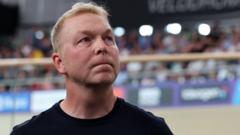
On 25 August 2026 Sir Chris Hoy told BBC Scotland that the responsibility for encouraging prostate cancer screening should not rest solely with high-profile individuals and that he will keep using his platform to raise awareness.
Hoy said he felt privileged to have a public platform after his own diagnosis and would continue campaigning even if a national screening system existed, adding: "It shouldn't just be down to high-profile individuals like Jeremy Clarkson or myself or any number of men who've been in a similar situation."
Sir Chris, who was diagnosed with stage 4 prostate cancer when he was 47 and who "turned 50 in March," described receiving a bowel screening test letter after his 50th birthday and discussed the complexities of testing, saying: "I understand the PSA test (a blood test that can help detect prostate cancer) isn't perfect, you know you can get results - not false positives, but it can be that men can be treated when they maybe didn't need to be treated."
On the question of treatment decisions and awareness he said, "But actually, I think that's not a diagnosis issue, that's a treatment issue, that's a decision for the doctors to make," and added, "I think knowing your situation is really important."
Hoy warned that "10,000 men a year in the UK find out too late that they have prostate cancer" and argued for a formalised process to help men understand their personal risk; in the short term he urged individual responsibility: "In the short term, until something more proactive happens you've got to take it on your own shoulders," noting, "It's not what you want to think about and it's always the thing you push down the list of priorities. You forget about it because life's busy."
The six-time Olympic gold medallist met employees from Tour de 4 backer ScottishPower for a training session at Bellahouston Park, Glasgow, ahead of his charity cycle, which he founded after his diagnosis and described as "doing something positive from a very difficult situation." He said the event aimed "to try and change perceptions of what living with stage 4 cancer can mean," and that, as well as raising money, it sought to "bring together people who are in a similar situation to me, to bring together families, people who are remembering loved ones" because "It's really a celebration of life."
Reflecting on public appeals from others, Hoy said he had been "moved" by Scottish swimmer Archie Goodburn's plea to the prime minister for increased brain cancer funding and cautioned that initial attention must lead to action: "So far, it seems that the powers-that-be are listening," he said. "My concern is that you get a lot of publicity from something like that and then the politicians, or the people in power or whoever the decision-makers are, will do something as a reaction - 'oh yes we're going to have a chat' or 'we're going to do this', but actions speak louder than words. "You want to see some practical change that will actually be implemented, not just a sit-down-and-talk and 'we might address this' and 'we'll have a look at it' because often that means 'we're just going to kick the can down the road' and nothing actually changes." "But Archie's not going to give up and I'm not going to give up."
Hoy said he was "doing really well" at the moment and added: "Right now life just goes on. You could spent your time sitting worrying about the future but that doesn't help you in any shape or form."
The Tour De 4 charity cycle takes place on Sunday 6 September, starting and finishing at the Sir Chris Hoy velodrome in Glasgow.