Colwall hosts centenary celebrations as Women’s Cricket Week maintains annual tradition

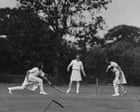
Colwall Cricket Club marked the centenary of organised women’s cricket last weekend with a 1920s-themed celebration during its annual Women’s Cricket Week, which this year featured period music, vintage cars and a softball competition.
The origins of the week trace back to August 1926, when a group of women’s hockey players stayed at the Park Hotel in Colwall, owned by Mollie Scott-Bowden, and played three days of cricket before deciding to take the game more seriously. Marjorie Pollard later wrote: “We sat in the Park Hotel at Colwall, and discussed how cricket could become real for us – no longer to be an illusive thing, that one played half afraid of ridicule. We pondered, mused, talked.” A month after that visit they met in London and formally established the Women’s Cricket Association, which ran English women’s cricket until 1998 and organised the first public women’s match (in 1929), the first female internationals (1934-35), and the first Cricket World Cup (1973).
Colwall’s centenary weekend included a heritage display in the clubhouse and a ribbon-cutting performed by England great and Cricket Week regular Enid Bakewell; the club staged a women’s softball competition in period dress with some participants wearing straw hats, long white dresses and white stockings. The Park Hotel’s “Colwall 1926” cocktail was on the menu, described as containing gin, prosecco, Yuzu soda and mint, and the event combined social elements—swing music and vintage cars—with five days of cricket on the edge of Colwall’s second pitch.
The club has recently taken steps to reflect the role women have played in its history: alongside longstanding male photographs the new display includes images such as Mrs Frances Heron-Maxwell in 1927 wearing a bow tie and England’s first wicketkeeper Betty Snowball in 1933. The archive notes that Snowball loved Cricket Week so much that she moved to Colwall and that she died there in 1988.
Participation patterns at Colwall have shifted in recent years: the club formed a women’s team five years ago and women and girls now constitute 37% of its membership. This year’s Cricket Week drew international and long-term attendees, including Ingrid van der Elst from the Netherlands, who played in the 1982 World Cup, and Coral Handley and Veronica Savage, who have attended for 50 years; Enid Bakewell, aged 85, was seen dancing at the event. Organisers and former internationals remain involved—Sarah Clarke, who played six one-day internationals for England in 2001-02 and represented Surrey for 16 years, has been the main organiser for two decades, and Claire Taylor opened the batting for the Cricket Week team in a match against MCC this year.
Long-running customs continue to shape the week: Fancy Dress Friday remains a feature, with recent examples including four players dressed as the Spice Girls accompanied by a cardboard union jack bus, earlier occasions when the Eiffel Tower opened the batting, and a match in which an inflatable Mr Blobby umpired. Participants describe the week as a supportive environment; one attender said: “When you go to Cricket Week you’re in a safe, supportive and inclusive bubble, insulated from the outside world,” and another said: “Once you’ve been to Cricket Week you’re part of an incredible family, and always will be, long after you stop playing.”
The future of Cricket Week is uncertain amid wider changes in women’s domestic cricket and shifting participation, a point raised by long-term attendee Carole Cumino, who recalled a peak of 16 teams once all captained by England players and said this year’s entry was four teams. Cumino added: “It’s fair to say that the quality of the cricket over the years has decreased, but when you’ve got professional county teams doing their own thing elsewhere, they’re not the people who are going to come to Cricket Week.” She also reflected on the event’s evolving role: “I think that there is a niche for Cricket Week, but it feels to me it’s emerging more as a festival of cricket and an opportunity for friends to meet up, for new people to come along and build those friendships and relationships going forward. We’re at a sort of watershed now. But it feels like talking to people, there is enough will to want to keep it going, because they really value it.”
The writer said she left Colwall grateful to the WCA founders and hopeful the festival will continue even as the wider women’s cricket landscape changes, while Colwall CC has committed to recognising that local history through its new clubhouse display and ongoing hosting of Women’s Cricket Week.