Consequences could be profound after Manchester City guilty verdict, Jonathan Wilson warns

Jonathan Wilson wrote that a guilty verdict against Manchester City in English football over conduct during 2009-10 to 2017-18 could have profound consequences. He noted the decision is not final and that there will be an appeal.
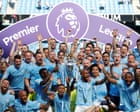
Wilson outlined how the verdict, if upheld, calls into question a string of landmark moments for City between 2009-10 and 2017-18: the 6-1 win over Manchester United at Old Trafford, Sergio Agüero’s 94th-minute title-clinching goal in 2012, the 100-point season and the 14 successive wins that led to the 2018-19 title; later achievements such as the 2023 Treble and a run of four league titles in a row would also be tainted. He recorded that 35 of the charges relate to a failure to cooperate with Premier League investigations between 2018 and 2023 and cited the unsettling possibility encapsulated in the phrase “We’re not really here?”.
Wilson described potential political fallout, citing a Bloomberg report that the government had been warned of possible negative consequences for UK–United Arab Emirates relations should the verdict go against City. He added that Andy Burnham was mayor during a period when UAE made significant investments in Manchester and spoke to the UAE president, Sheikh Mohammed, within a week of becoming prime minister in July.
Comparing precedents, Wilson set out the scale of possible sanctions and liabilities: Everton’s single 2022 breach—overspending the profitability and sustainability threshold by £19.5m—led to a six-point deduction and a requirement to pay Burnley £26m in damages plus £9m in interest. He wrote that City’s offences are “almost incalculably worse,” that the club failed to cooperate with the investigation and that consequences could include forced relegation as well as financial claims from clubs disadvantaged by the period in question.
He listed forms of competitive and financial harm that might give rise to claims: other teams denied European places, lost prize money and relegated sides arguing City were a factor in their dropping out of the Premier League. Wilson posed specific questions about downstream effects, asking whether Leicester, who narrowly missed Champions League qualification in 2020 and 2021, would have qualified had City not been “artificially juiced,” and whether participation in the Champions League then would have altered Leicester’s subsequent predicament.
Wilson invoked historical examples to illustrate potential long-term damage: when City were found guilty of illegal payments to players in 1906 and forced to sell off the bulk of their squad, he wrote, it took them 30 years to recover; he added that when Sunderland were convicted in 1957 they were relegated the following season and “have never retained their previous status.” He emphasised the emotional toll, noting the Agüero goal is “arguably the most famous moment in Premier League history” and observing that City fans online have been attempting to cope by framing the verdict as conspiracy or irrelevance rather than the consequence of their owners’ actions.
Turning to the wider implications for the Premier League, Wilson argued there is a broader sense of being cheated and warned of possible commercial and reputational damage: he questioned whether fans will care about a season if “an independent panel might decide in 17 years it wasn’t real either,” and asked whether interest and revenues could fall. He wrote that not to act would legitimise rule-breaking, described the Premier League’s choice to pursue enforcement as a painful route and said there could be lean years ahead, consequences as yet unimagined, but added that the league is taking that route because otherwise the game would not be able to govern itself.
Wilson concluded by reiterating that the verdict is not the final word: there will be an appeal and “this is not yet the final truth, which could still be a long way off.”