Deion Sanders backs Protect College Sports Act after appearing in ad as Senate sends bill to the House

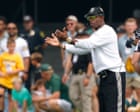
Last week, former NFL star and Colorado coach Deion Sanders appeared in an advertisement promoting the Protect College Sports Act, prompting criticism after the Senate passed the bill and it awaited approval from the House. Journalist Rob Parker called Sanders a "sellout" for taking part in the advert.
The Protect College Sports Act (PCSA) would, among other changes, set a ceiling of around $49m that schools can direct to athletes and introduce a transfer rule limiting most players to one "free" transfer, with a year’s ineligibility if they transfer again except in specified circumstances. Former NFL player Domonique Foxworth said that "the core of [the PCSA] is about reestablishing the power the NCAA had in the past – that the court system determined was illegal". In his pro-PCSA ad Sanders said: "As a coach and father, I’m helping the next generation find their spotlight. That’s why I support the Protect College Sports Act. It gives student-athletes a chance to shine on and off the field, strengthens historically Black colleges and universities, and keeps both men’s and women’s sports strong." The article argued that many people are disappointed to see Sanders stumping for a bill described as harmful to athletes.
The PCSA would not eliminate or cap name, image and likeness deals but would require that deals be proven to be worth roughly what a comparable figure would earn for a similar endorsement and demonstrate a genuine commercial purpose, a requirement the article said could end agreements that effectively pay students to play. Sanders has expressed mixed public views on NIL: in June he told reporter Baker Machado, "I do believe that college athletes should be compensated for their name, image and likeness. But it’s not about name, image and likeness right now. It’s just about pay-per-view." Four years earlier, while at Jackson State, he said NIL deals turn NCAA athletes into "professionals", adding "you don’t have staffs large enough and equipped enough to handle a young man with money."
Nick Saban is cited in the piece as a fellow PCSA supporter, arguing that NIL "created an environment with no control, no guardrails" and that "Now you’ve got transfers that are out of control. You’ve got salaries that are out of control. You’ve got budgets that are out of control." The article contrasts that critique with Saban’s own compensation, saying he made more than $121m during his 17-year tenure at Alabama. It states Sanders earns $10m a year and is the highest-paid head coach in the Big 12, and that Colorado’s athletic department ran a $27m deficit in the last fiscal year, attributed in part to Sanders’s salary. The PCSA includes a "Lane Kiffin rule" to prevent coaches changing jobs mid-season but contains no cap on coaching salaries or buyouts.
The article highlights Sanders’s personal history with commercial opportunities, citing his 2011 Hall of Fame speech in which he said: "Cornerbacks, running backs, linebackers, defensive backs weren’t paid a lot. And in my dormitory room at Florida State, I created this image … You could love him or you could hate him, but he was Prime Time." It notes Sanders recorded a 1994 rap song called Must Be the Money and that he has criticised NIL for turning college sport into "a business". The piece asks whether Sanders would have passed on an endorsement while supporting his family during his college years.
On recruitment and career moves, the article recalls that Sanders’s tenure at Jackson State attracted top recruits, including Travis Hunter, described as the top-ranked high school player in the country, and that Sanders left Jackson State to take the Colorado job in 2023. It contrasts his path with other former NFL players who accepted HBCU coaching roles—Michael Vick (Norfolk State), DeSean Jackson (Delaware State) and Marshall Faulk (Southern University)—noting the article’s view that those figures are "unlikely to lead their teams to national championships" but are serving as mentors at their schools.
The piece argues the PCSA would amount to a federally protected salary-cap and employment framework imposed without collective bargaining, saying a coalition of legislators, college leaders and boosters would roll back players’ labour rights without athlete representation. It states the proposed changes would disproportionately affect Black players, who make up 66% of football rosters at ACC, SEC and Big 12 schools, and quotes NAACP president Derrick Johnson: "Public institutions cannot depend upon Black athletes to fill their stadiums, secure television contracts, attract donations, and build nationally recognized brands, then claim neutrality when the political rights of those athletes, their families, and their communities are under attack." The article concludes the author views Sanders as "dead wrong for working against those rights."
The Senate has passed the Protect College Sports Act and, according to the article, the bill now awaits consideration by the House of Representatives, a development the piece identifies as the next step in the legislative process.