Dempo: 'In football there's nothing,' says club owner Shrinivas Dempo

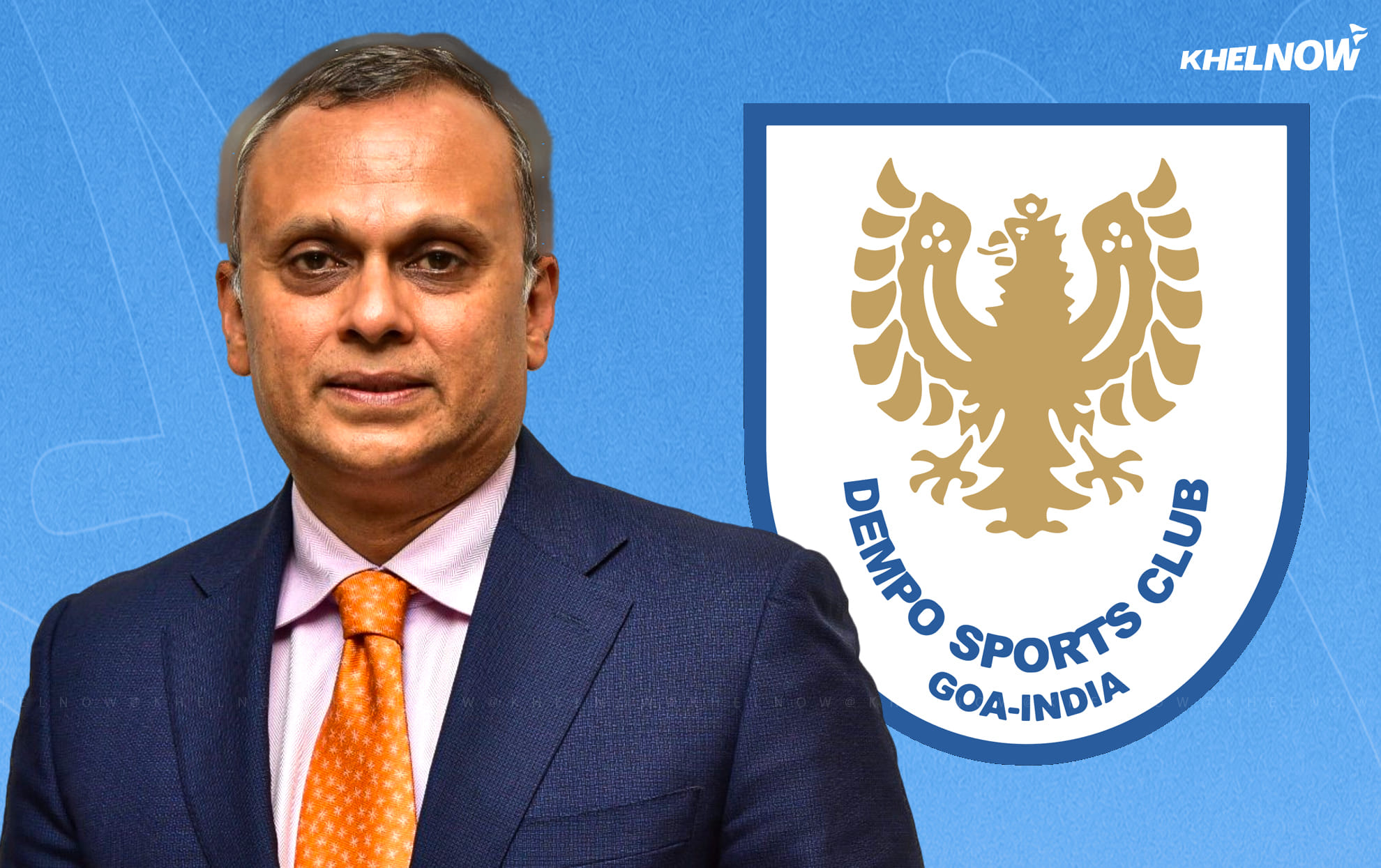
Dempo SC owner and president Shrinivas Dempo told the Times of India in a recent interview published on August 12, 2026, that the club’s attempt to return to the top of Indian football must not jeopardise its financial stability. He said clubs should prioritise developing local talent and follow a clear roadmap rather than relying on heavy spending.
Having invested heavily in the past, Mr. Shrinivas Dempo said the club now favours organic growth through youth development and a defined commercial plan. He discussed the club’s ambition, the importance of local Goan players and broader challenges in Indian football, arguing that indiscriminate expenditure is not the solution. Speaking about recent shifts in the domestic landscape, he raised questions about the current financial model and referenced Jamshedpur FC’s exit as a point of concern.
Mr. Shrinivas used his ownership of a Goa franchise in Ultimate Table Tennis (UTT) to contrast the two sports’ economics and recalled corporate retreats from football. “Corporates have shut football teams in the past. I remember when Mahindra (United) closed down, I phoned (executive director) Alan Durante and told him if Mahindra shuts shop, how can Dempo survive? He said the message from the promoters was clear: money must be put to good use.”
He questioned whether corporate spending on football delivers commensurate returns and called for measurable plans before committing funds. “For Tatas, what they spend on the football team is not big money, but where is it taking them? They do so much of philanthropy and perhaps that kind of philanthropy gives them more goodwill equity than just putting money in football, bringing in foreigners and paying them.” He added: “There should be a roadmap. I’ll spend money, I’m willing to lose money for the next two or three years, but does the roadmap show that I’ll ever gain? In Ultimate Table Tennis (UTT, where Dempo owns the Goa franchise), I get confidence from the fact that I will break even in two or three years. In football, there is nothing.”
Mr. Shrinivas said his ongoing investment in Indian football is motivated largely by the hope of producing players from the academy, even as running costs rise. “We always feel there’s hope. Through the academy, we want players to emerge. We want the number to increase. Otherwise, with the kind of figures that were discussed at the last IFL (general council) meeting, I am seriously concerned whether I will be able to continue.” He emphasised the need for a sustainable model that ultimately delivers some commercial advantage rather than spending for its own sake: “The model must be sustainable; the model has to eventually give you some commercial advantage. Maybe not profits now, but if you just tell me to spend money for the sake of it, you have to really evaluate whether that money is well spent.”
Acknowledging doubts about the academy’s long-term viability, Mr. Shrinivas pointed to encouraging signs of parental investment and rising fee payments from players. “We are spending a lot on the academy. Apart from philanthropy, which I enjoy, there are question marks if the academy model remains viable.” He continued: “The good news is that, at the academy, this time we are getting about six to seven players who are paying us over Rs 5 lakh. Somewhere down the line, parents are willing to take that risk. I also heard from our secretary Lector (Mascarenhas) that two parents came to the academy and asked if their boys could just train. They were willing to pay Rs 2 lakh, just to practice with the team.” He added, “That is some light at the end of the tunnel. But we need volumes, and the volume is now there right now in Dempo.”
The original piece was published by Khel Now and written by Ayushman Sharma. Ayushman Sharma is described in the article as a sports enthusiast who has followed football closely since 2018, a supporter of NorthEast United FC and FC Barcelona, and someone who volunteered during FIFA World Cup Qualifiers in Guwahati.
Mr. Shrinivas said the financial figures discussed at the last IFL general council meeting leave him “seriously concerned whether I will be able to continue,” even as growing academy enrolment provides some optimism about volume and sustainability going forward.