Director Joe Pearlman on José Mourinho, a Netflix series and the ‘rucksack of pain’

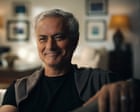
Joe Pearlman, director of a new three-part Netflix series about José Mourinho, described in an interview published on 18 August 2026 how he filmed the Real Madrid manager and what he found in the process. Pearlman said the series exposes both Mourinho’s public persona and more private moments encountered during production.
Pearlman told the Guardian he expected the interviews to be demanding and anticipated Mourinho would try to shape the story around himself, saying: “I knew the interviews were going to be very intense, and he was going to try and control the narrative and manipulate us.” The director added that the programme shows the manager’s insistence that winning validates his actions, and included a line from Mourinho in the series: “I look, you look, I see more than you.” Pearlman also described Mourinho as a figure whose charisma and tactical ability coexist with a confrontational outlook on opponents and critics.
The documentary touches on Mourinho’s family background and the death of his father, Félix Mourinho, in June 2017, moments that prompted visible emotion on camera. Pearlman said: “He’s obviously buried the loss of his father,” and later characterised Mourinho’s long-held hurt as a burden in the manager’s life: “Losing his father changed him; it tainted the years that came afterwards. And on top of that, José carries every word, every goal, every decision that doesn’t go his way; it’s a rucksack of pain he’s been lugging around since he was probably 19, 20 years old.”
Pearlman traced the formation of Mourinho’s public identity to his upbringing as the son of a well-known coach and to his route into coaching without a professional playing career, arguing those elements fed a persona that football allowed him to expand. “He was looking for an outlet to be the biggest possible version of himself and football allowed that,” says Pearlman. “The ego and the charisma on top of the talent meant he could embody a character he’d always dreamt of being, that maybe he wasn’t in his childhood, and that is the person that we’ve come to know as José Mourinho.”
The series presents Mourinho as someone who treats football as a theatre of conflict where extreme behaviour can be a tactical choice; Pearlman noted the manager remains unapologetic about past controversies involving Anders Frisk and Eva Carneiro. The director also highlighted a tension in Mourinho’s needs for attention and conflict, quoting him on the performative dimension of that attention: “It can also be: ‘I want to have a lot of attention on me’,” says Pearlman, “and conflict brings that in spades. It’s like this safety blanket that allows him to feel like he’s doing things for a righteous cause.”
Pearlman described a different side of Mourinho away from the spotlight, saying he is more reserved at home and that the documentary captures a painful admission about time spent apart from his family. “You can kind of hear it in my voice,” says Pearlman. “I’m like: ‘Oh my god, what does it even feel like saying that?’” Those scenes sit alongside footage of Mourinho’s professional highs and the calculated manufacture of his public character.
Pearlman summarised the series as probing what happens when a life is defined by winning and that pursuit ends, calling it both “the portrait of a hero and a villain” and a study of leadership. He added that the show concludes on an upbeat note with Mourinho’s return to Madrid, saying: “He is now where he believes he should always have been – after every cup Madrid have won since he left, Florentino Pérez has called to say: ‘This is because of you,’ because of how he modernised the club. And one thing we all know is that whatever comes next, it’s going to be a box-office blockbuster.”