Edward Payson Weston and the era when pedestrianism became a mass spectacle

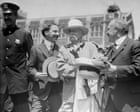
Edward Payson Weston helped turn pedestrianism into a Victorian sensation when he walked from the Massachusetts state house in Boston to the US Capitol in Washington, setting off on 22 February and arriving on 4 March after promising to complete the journey in ten days. His feat, publicised and monetised, sparked a craze for long-distance walking that drew paying crowds in the United States and Britain.
The episode began as a wager after Abraham Lincoln's election in 1860: a 21-year-old door-to-door bookseller named Edward Payson Weston bet a friend he would walk 478 miles from Boston to Washington if Lincoln won. “It was simply a banter between ourselves while dining together one day, and I do not suppose that either of us at that time had the remotest idea of ever attempting such a task,” Weston wrote in his 1862 account, The Pedestrian’s Adventures.
Weston’s path to public attention included being sacked from a travelling circus after being struck by lightning, then working as a copy boy for the New York Herald where he discovered what he called his “great locomotive powers” while rushing across Manhattan. He assembled a support team and secured sponsors to offset costs, was briefly arrested by a constable for an unpaid debt before his departure, and—after taking a wrong turn that cost him a few hours—arrived in Washington and attended Lincoln’s inauguration ball on the night of his arrival.
Dubbed the “Wily Wobbler” for his distinctive gait, Weston served as a Union spy and dispatch-bearer during the civil war and, after the conflict, helped propel pedestrianism into one of the most popular spectator sports of the late 19th century. Events were staged in venues such as Madison Square Garden and the Oval in London, and chroniclers including Nick Harris, Helen Harris and Paul Marshall have documented Weston’s role; 2026 marks the 150th anniversary of his first British tour, which intensified transatlantic rivalry.
The contests combined precise timing, theatricality and sometimes brutal measures to keep walkers moving. A December 1876 Times report described Weston attempting 505 miles in six days with English pacers and listed split times down to the second—“Ten miles, 1h.53min. 50sec.; 20 miles, 3h. 50min. 50 sec.”—and recorded that “Weston made but one stoppage, of 18min, 10sec, during which time his head and feet were bathed.” Other accounts note meals of beef tea and gruel during a 55-mile, 12-hour walk at Trent Bridge, a half-mile backward walk accompanied by a band while Weston played cornet, and episodes in which he doused his feet with whiskey and lashed his legs with a riding whip to stay awake during an 1870 attempt to cover 112 miles in 24 hours.
Scientific curiosity and controversy followed Weston: doctors measured his pulse and breathing and tracked his intake during an 1884 British walk, and he was at the centre of debate over stimulants after it emerged he chewed coca leaves during one race, ingesting traces of cocaine. Some contemporaries used champagne as an alleged stimulant, while Weston reportedly abstained from alcohol before and during races and was seen as a figure for the temperance movement. The lack of a governing body left promoters and showmen such as PT Barnum to stage and market races and to set rules.
Betting was entwined with the sport and opened routes to manipulation; as Matthew Algeo told NPR, spectators could wager on multiple race outcomes, enabling corruption. High-profile events offered large prizes: Sir John Dugdale Astley’s 1878 six-day “world championship” awarded the Astley Belt and £500 (equivalent in 2026 to £54,000 or $72,000), which Daniel O’Leary won with 520 miles at Islington. Female pedestrian Emma Sharp’s 1864 effort to walk 1,000 miles in 1,000 hours drew reported attempts to sabotage her—burning embers, chloroform attacks—and she was said to have fired warning shots from a pistol in response.
Pedestrianism waned in the 1890s as shorter, more watchable pastimes such as bicycling and baseball grew in popularity, yet some of its practices persisted: Olympic race walking later appeared as a standalone event for men at the 1908 London Games, while the International Olympic Committee itself was not founded until 1894. Weston continued public endeavours late in life, embarking on a 1909 walk from New York to San Francisco on his 70th birthday that he chronicled for the New York Times and completing 3,895 miles in 104 active days (122 days including rest periods).
Weston’s final decades were eventful and troubled: in 1924, aged 85, he reportedly fought off intruders who shot him in the leg at his farm near the Hudson River; the New York Times later said he was living on a $150-a-month trust fund and had long ago separated from his wife. Struck by a taxi in Manhattan while walking to church in 1927, he was left wheelchair- and ultimately bed-bound and died two years later at 90, leaving a complex legacy that fed both sporting spectacle and the later codified discipline of race walking.