ESPN cuts veteran staff as article says network has completed retreat from serious NBA coverage

On 15 August 2026, ESPN cut familiar on-air and production staff in a round of layoffs, a development the piece describes as completing the network’s retreat from serious NBA coverage. The article cites on-air errors, high-profile departures and audience and rights-cost figures to support that assertion.
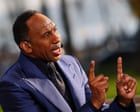
After the Phoenix Suns dumped the Golden State Warriors out of last season’s play-in, Stephen A Smith, on First Take, claimed the Warriors hadn’t “been to the playoffs since that championship in 2022,” an error that Shae Cornette attempted to correct on air but which went unheeded. The article notes Smith had been inducted into the National Black College Alumni Hall of Fame and that ESPN pays $2.6bn a year to televise the league; it also records several on-air miscues by Smith, including calling Miles McBride “Michael,” crediting Quentin Grimes for a Knicks hot streak after Grimes had been traded to Detroit, and dismissing Isaiah Hartenstein as “some dude name Hartenstein.”
The piece details recent personnel moves at ESPN: Ryan Clark was, according to the article, told he had been fired during a commercial break while taping NFL Live and never returned, Karl Ravech was shown the door after 33 years, and names such as Cam Newton, Tom Pelissero and a number of producers were listed among other casualties as ESPN absorbed NFL Media into its operation.
Financial and distribution pressures are set out with specific figures: ESPN’s reach is said to have peaked at nearly 100 million cable households in 2011, fallen below 68 million by 2024 and to be roughly 55 million today; annual rights bills for the NBA, NFL, College Football Playoff and SEC are reported to total around $8bn; and a YouTube TV blackout in November burned nearly $100m in 15 days.
The article records the network’s editorial shift: when ESPN laid off Zach Lowe in September 2024, it lost, the piece argues, its last staff member who could dissect a possession on television, and it contrasts that loss with spectacles such as Christmas Day 2024, when former Warriors executive Bob Myers bowed his head while Stephen A Smith and Kendrick Perkins argued about Joel Embiid v Tyrese Maxey and the discourse quickly moved to Michael Jordan v LeBron James. It also cites NBA commissioner Adam Silver’s description of basketball as a highlights-based sport and reports that the league’s media partners have committed roughly $77bn over 11 years to broadcasting full games, with watching all those games costing about $900 a year in subscriptions.
The article links changing consumption habits and literacy metrics to coverage trends, noting that the 2025 finals averaged only 10.2m viewers and that short-form platforms such as YouTube Shorts and Instagram Reels cost nothing while rewarding provocation over context. It gives several literacy and usage statistics: reading scores among American 12th-graders have fallen to their lowest level since testing began in 1992, with 32% of seniors performing below basic; the share of adults on the bottom rung of the international literacy survey rose from 19% in 2017 to 28% in 2023; Harvard’s Martin West is cited as noting that just 14% of 13-year-olds read for fun almost every day in 2023, down from 27% in 2012; fans aged 18 to 24 now watch 2.7 hours of highlights each week; and Pew found that 54% of teenagers use chatbots for schoolwork, including 42% who use them to summarize an article, book or video.
The article reviews editorial choices and specific controversies: it traces First Take’s launch in 2007 and the later rise of Smith and Skip Bayless, describes the DiJonai Carrington incident—Carrington struck Sophie Cunningham across the head and neck on a fast break, received a Flagrant 2 and was ejected, then posted “WHITE PRIVILEGE” from the locker room while tagging the Fever and later insisted the post did not refer to the ruling—and criticises ESPN’s handling, saying the network showed one replay, passed over the story at half-time and then assembled a panel that questioned the whistle while barely engaging with the post. It also reports that ESPN gave the NFL a 10% equity stake in exchange for NFL Network and other media assets and that Aaron Rodgers used ESPN’s airwaves to ask how much time the network had spent on the Dianna Russini–Mike Vrabel controversy compared with its fixation on his vaccination status; Michael Wilbon is quoted as saying ESPN’s NFL reporting should be viewed “skeptically.”
The article notes that fans and independent creators have built alternatives, citing the Knick of Time Show’s growth into a multi-platform Knicks brand with more than 3m views and 52,000 followers across platforms, Slightly Biased’s 34,000 subscribers, and Hoops Tonight with Jason Timpf’s possession-by-possession breakdowns as examples of long-form, explanatory coverage that the piece says teaches more than much network debate.
The article records ESPN’s own audience figures and its conclusion: the network reported that 2025 was its most-watched year since 2017, while First Take averaged a record 517,000 viewers. The piece concludes with the lines used in the article: “The shouting works. That is precisely the problem. ESPN has already placed its bet.”