Experts propose structural fixes to FIFA after World Cup controversies

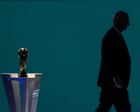
Gianni Infantino proposed allowing private investors into FIFA after controversies at the recent World Cup, according to reporting published on 6 August 2026. The proposal drew widespread criticism and has prompted calls from former insiders and governance experts for a series of reforms to the governing body.
Critics say FIFA has demonstrated conflicts between its commercial ambitions and its regulatory role, citing instances at the World Cup where rules on the length of suspensions and the duration of half-time were altered to attract more attention. Miguel Maduro, a former chair of FIFA’s governance committee and a leading critic, said: “They have shown that they will bend the rules to make them more money. This is a big conflict of interest. Not only should the commercial and the regulatory parts of Fifa be separated, but so should the development part and possibly one or two others as well.” Maduro’s position is that structural separation would be necessary to change incentives within the organisation.
Maduro and other sources recommend creating separate corporate entities under a FIFA umbrella with a strict Chinese wall between them so different priorities can operate independently. An insider noted that Gianni Infantino’s aborted FIFA Forward Enterprise (FFE) scheme would have created such a separation “but for completely the wrong reasons”. Maduro said of reform prospects: “Change needs to be imposed from the outside. It won’t happen from the inside.”
Several commentators argue for independent external oversight, likening the need to the existence of WADA for anti-doping, and suggesting the new body could be funded from the large sums circulating in football. “There’s so much money swirling around in football it could easily be funded,” said one FIFA-watcher. Maduro added: “One way is to do something at the level of the EU,” and noted that Uefa has been moving closer to Brussels while the European Leagues has urged the European Commission to intervene over proposals such as expanding the World Cup from 48 to 64 teams; the commission, the Leagues said, “should take the necessary action to protect fair competition and ensure compliance with the principles already set out by the court of justice of the EU”.
The concentration of power in the presidency is another frequent target: the FFE affair was reportedly devised without the knowledge of anyone outside Infantino’s office, and Maduro said the president began to control the administration while the FIFA Council failed to exercise intended oversight. One proposed check is to remove the president’s power to determine funding. Governance expert Mark Pieth recalled a proposal attributed to Uefa president Aleksander Ceferin for a rotating presidency among the six continental confederation heads and said: “It’s not an outrageous idea. I am Swiss and it happens in my country. Seven ministers take turns being the president, but their tenure lasts one year and it’s clear who the next president is because they go around in order. The effect is nobody gets really powerful. Then you ask yourself, well, why would a Fifa president need power anyway? He’s there to organise matters.”
Transparency around FIFA’s finances and development spending is a persistent grievance. Nick McGeehan, director and co-founder of Fair Square, asked: “Where are the audited accounts?” and added: “Go on their website and you can find all sorts of data about what money is spent, but if you actually wanted to verify what that money is being spent on, it’s impossible.” The organisation’s repeated line — “Fifa is a not-for-profit organisation – the money it makes is reinvested in football.” — has been cited amid scrutiny over the $15bn (£11.2m) reportedly generated by this year’s World Cup and the announcement that each member nation can expect to receive $8m between 2027 and 2030.
Observers also question how funds are distributed and who makes decisions inside FIFA. “It’s an issue that one country, one vote is combined with giving everyone the same amount of money,” said the FIFA-watcher. “The money is distributed in proportion to votes, which is completely wrong because Montserrat and Gibraltar have very different needs to Nigeria or India. It’s amazing that he didn’t look to even try and tweak that.” A senior football figure described the composition of FIFA’s decision-making bodies, saying: “When I am at a Fifa meeting and I look around the table, I see very few people who have direct experience of either playing the game, or being a coach or an executive at a club. I see very few people who actually understand the day-to-day of football.” Ashish Prashar, a political consultant, urged confederations to form a new entity prioritising fan involvement and said: “What we need is confederations to get together and form a new entity to solidify the game with the values that serve the people. The biggest item for that entity must be fan ownership of the game. The World Cup and its surrounding events should involve the public in its decision making whether that’s fan groups, fan ambassadors or elections for fans.”
Fifa was approached for comment.