F1 drivers criticise engine rules after software failures halt Bahrain Grand Prix in Sepang

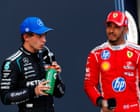
Formula One drivers united in criticism of the sport’s engine regulations after cars stalled on track at the Bahrain Grand Prix in Malaysia, at Sepang, an incident reported on 4 October 2026 that forced an aborted start and a long delay.
The problem arose when engine-control software failed in low-grip, wet conditions, leaving several cars unable to accelerate and only barely able to complete two formation laps as they approached the grid; the start was abandoned and the field returned to the pit lane for a software update that produced a 53-minute delay. Red Bull’s Max Verstappen ultimately won in Sepang, but the opening scenes drew widespread condemnation from drivers and teams.
“Kimi Antonelli of Mercedes said: "It was insane,"” and he described a confusing sequence on the straight during the aborted start, while Lewis Hamilton recounted a personal stoppage: “I had to stop on-track, stop the car, the engine, and restart it. I’ve never done that before,” he said. Verstappen reiterated his criticism of the regulations, saying: “What can you say? It’s not what you want for the sport. I hope there is a lesson learned.”
Defending world champion Lando Norris, who finished ninth for McLaren, labelled the situation “just horrible” and criticised the electronic elements of the power units, adding: “We shouldn’t have any of that stuff, the electronic side”. Williams’ Carlos Sainz called for scrutiny of the rule-making process: “[F1] needs to have a hard look at themselves and see how we ended up in this situation,” he said. “It is clear the regs are extremely complicated for the drivers, for the teams, for the power units, for the manufacturers. It is too complicated. Again, my only question mark is who five years ago decided that this was the direction to go?”
The FIA described the fault as “an unintended loss of power” caused by software that had not been sufficiently tested in the wet, prompting a mandatory update during the pit-lane halt. Single-seater director Nikolas Tombazis acknowledged the governing body had been caught out, saying: “We didn’t manage to test the software as extensively as we would have liked because there’s been very little wet running this year and there was a bit of a combination of circumstances which caused this bug to kick in.” He added: “Basically, the formation lap, some cars went very slowly, almost came to a standstill. There was a bit of a concertina effect between cars, and some cars almost stopped completely. That bug prevented the power to be redeployed and for the cars to start again. I think if we had a bit more testing, we probably would have managed to catch it in time and not to have such a situation.”
The current power-unit formula, described in coverage as an almost 50-50 split between electronic and combustion power, will remain unchanged for this season, with only a minor adjustment scheduled for next year and a more significant revision planned for 2028.