FIFA fines Argentina, bans players after 2026 World Cup final confrontation

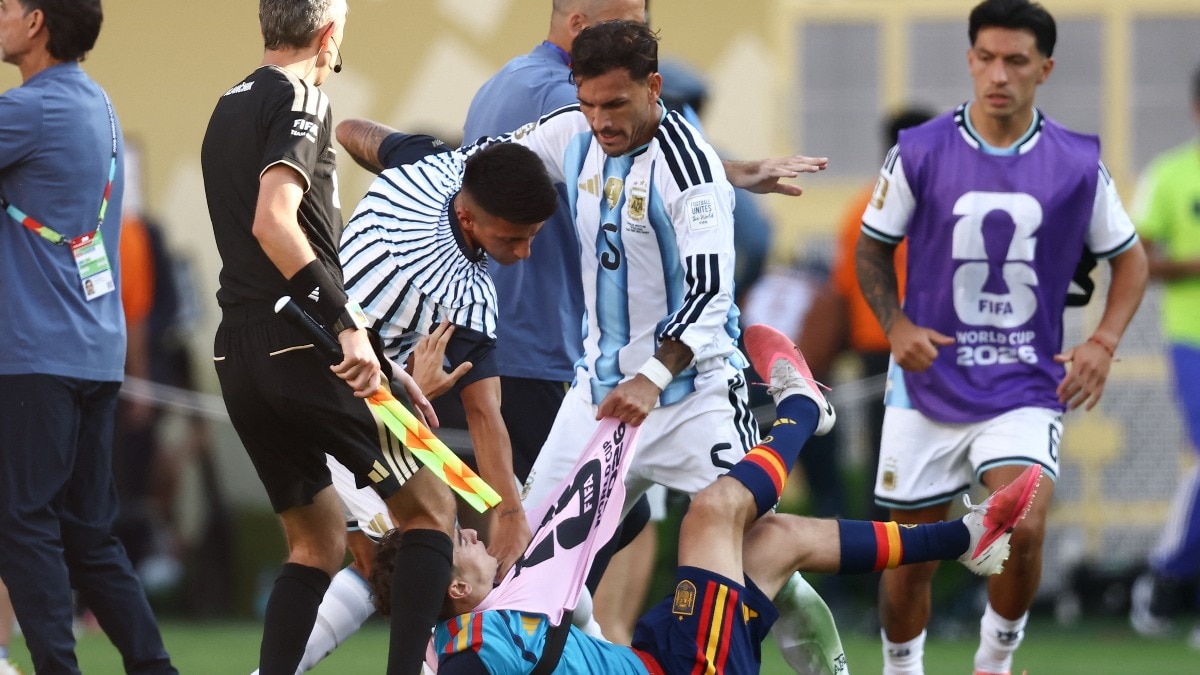
FIFA has punished the Argentine Football Association and several members of Argentina’s squad and coaching staff for disciplinary violations arising from the 2026 World Cup, citing the confrontation that followed the final on July 19.
The Argentine Football Association has been ordered to pay $321,000 after FIFA found multiple disciplinary breaches during the tournament; one incident cited was a banner shown by some Argentina players after their semi-final win over England that read “Las Malvinas Son Argentinas”, translating to “The Falklands are Argentine”.
FIFA also imposed sanctions on individuals linked to the post-final melee, disciplining four members of Argentina’s delegation and handing a sanction to a Spanish player. Leandro Paredes received the stiffest penalty among Argentina’s players: a 10-match suspension and a USD 90,000 fine.
Television footage of the post-match events showed Paredes approach Spain defender Eric Garcia after the final whistle and make physical contact, which escalated into an angry exchange. Barcelona midfielder Gavi intervened in an attempt to calm matters and prevent a further escalation; footage then showed Paredes move towards Gavi before Thiago Almada intervened. Almada pushed Gavi as he tried to restrain Paredes, tensions rose further and Paredes ultimately struck Gavi in the face, with players from both teams drawn into the post-match melee.
Defender Nahuel Molina was handed a seven-game ban and ordered to pay an additional USD 90,000 fine. Forward Thiago Almada received a one-match suspension and a USD 30,000 fine, while assistant coach Roberto Ayala was banned for three matches and fined USD 30,000.
Argentina will be required to stage its next home fixture with the stadium operating at 50 per cent of its normal capacity. FIFA has suspended an additional stadium-capacity restriction and USD 100,000 of the financial penalty on a probationary basis, and a further USD 100,000 of the fine must be invested in an anti-discrimination programme.