Franco Baresi: the centre-back who embodied Milan’s defensive age

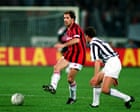
Franco Baresi stood as the defining central defender of his generation, his career epitomising a period of hard Italian defending and a trophy haul that underlines his quality. His presence at the heart of Milan combined leadership and a style that became synonymous with the era.
Very few players come to be shorthand for a position in the way Baresi did. For anybody who watched football in the late 80s or early 90s, Franco Baresi was the central defender — widely regarded as unsurpassed and, to many, the best in the world at his role. His approach helped set the standard for defending while also marking him out as unusual compared with typical stoppers of the time.
He had just turned 19 when he won his first scudetto with Milan under Nils Liedholm. The year was 1979, a period when Italian football remained heavily influenced by the ideals of catenaccio. That title arrived at a moment when the game in Italy was still thought of largely in defensive, tactical terms.
At the time, most backlines were made up of a libero, two man-markers and, where available, an attacking left-back. Liedholm did not follow that conventional blueprint. The Swede was an early adopter in Serie A of zonal marking and promoted the idea that football was fundamentally about the control of space rather than a succession of individual physical contests.
Baresi himself was only 5ft 9in and still a teenager when Liedholm placed faith in him. The coach recognised an exceptional reader of the game even at that age, and Baresi responded by becoming an ever-present figure not only in the league but also across Coppa Italia and the Uefa Cup. Those seasons established the pattern of consistency and tactical intelligence that would define his career.
The combination of tactical innovation around him and his own understanding of positioning and space made Baresi stand apart from many contemporaries. His early integration into Milan’s first team and sustained involvement in multiple competitions built the foundations for the reputation he carried into the late 80s and early 90s.
Baresi’s standing — as a captain, a defensive exemplar and a player whose honours endure as testimony to his class — remains clear. His career remains a key reference point for anyone examining that era of Italian football.