From Sherborne to France: The teams that inspired a rugby writer

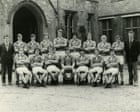
Last Saturday evening in deepest Dorset I attended the 50-year reunion of Sherborne School’s unbeaten 1st XV, an event the author used to introduce a roundup of the most inspiring sides in rugby history in The Breakdown.
The piece poses a deliberately subjective question about which teams have resonated beyond mere results, arguing that inspiration is shaped by timing and circumstance rather than trophies alone. It cites examples ranging from Gloucester supporters recalling the Shed and names such as Teague, Fidler and Blakeway, to a contemporary debate in South Africa where many are arguing the national team’s present form could be historic and noting that "Should Siya Kolisi and his team claim an unprecedented third successive men’s Rugby World Cup triumph next year" the pride would spread widely. The article also invokes eras when the All Blacks and England approaching their 2003 World Cup run captured national attention and mentions the possibility of a similar wave of enthusiasm in Australia.
The author’s proposed top six opens with France’s 1977 Five Nations grand slam side, compared in scale to late-1970s packs such as Pontypool. The back row named includes Jean-Pierre Rives, Jean-Claude Skrela and Jean-Pierre Bastiat; the front five listed Gérard Cholley and Robert Paparemborde at prop with Jean-François Imbernon and Michel Palmié in the second row; Jacques Fouroux is described as diminutive and partnered at half-back by Jean-Pierre Romeu.
The 1984 Wallaby touring team is singled out for its attack, with Mark Ella, David Campese and Michael Lynagh mentioned as exemplars of a side that moved the ball fluently. The article pairs that era’s free-flowing back play with Fiji’s sevens performance at the 2016 Olympic final in Rio de Janeiro, recounting Ben Ryan’s squad as fulfilling their gold-medal destiny in front of a global audience.
The Barbarians are included for their ethos of self-expression and camaraderie despite the pressures of professionalism, and the piece recalls Gareth Edwards’s full‑length diving try in Cardiff in 1973 as an enduring moment that still evokes strong reactions. The author frames the Barbarians as embodying the spirit that draws many into rugby.
Turning to domestic underdog stories, the article recalls the John Player Cup third-round tie between Old Reigatians and Saracens, noting it will be 40 years this January since the author was in the crowd for that match. Old Reigatians had already beaten Exeter in round two and produced an improbable 12-10 victory over Saracens in the third round; the writer adds that, at the time, he was covering the side as the Daily Telegraph’s Old Boys’ Rugby correspondent and knew several of the players.
The final podium spot is given to Sherborne School’s 1st XV, credited with an unbeaten run lasting almost five years from December 1974 to the late autumn of 1979 that stretched to more than 40 matches and included wins over teams from Wales and Ireland. Coaching is identified as central: Mike Davis is described as the forwards coach, an England coach at the time and a teacher at Sherborne, while Phil Jones, a former Bath fly-half who later became headmaster of Christ College Brecon, coached the backs; the article recounts Davis leading his "honey monsters" downfield and lying in the mud to invite rucking, and it names David Dally as the side’s fly-half.
This article is an extract from the weekly rugby union email, The Breakdown; to subscribe, visit the page and follow the instructions.