Glasgow’s Commonwealth Games return met with muted reception as mascot Finnie draws puzzled looks

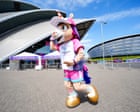
The Commonwealth Games have returned to Glasgow, but the atmosphere on the city’s streets feels notably subdued compared with 2014 and the event’s mascot, Finnie the unicorn, has not immediately registered with many locals. One Glaswegian put the reaction into words: “I genuinely didn’t realise that the unicorn was the mascot,” Karl, a 33-year-old Glaswegian native, says with a laugh. “I caught a glimpse of one of the posters from the bus and thought: ‘Are the bronies making a comeback?’”
When Glasgow last hosted the Commonwealth Games in 2014, excitement built over many months and the city embraced the buildup. That earlier staging left a strong imprint on local memory and set a high bar for public engagement. This return to Scotland’s biggest city arrives under different circumstances, with a noticeably quieter public profile in the run-up. The contrast with 2014 is central to how residents and visitors are perceiving the current edition of the Games.
A snapshot encounter on Glasgow’s streets illustrated that disconnect: the first person approached did not immediately identify Finnie as the official mascot. The name Finnie the unicorn has been prominent in event branding, yet that familiarity has not translated into instant recognition among some passersby. The poster spotted from a passing bus prompted a wry comparison rather than an expression of civic pride, underscoring the uneven public awareness.
The tone around the Games appears less celebratory than it was in 2014, when local anticipation was sustained for months ahead of the competitions. Organisers and residents alike are navigating a different public response this time, which has tempered the build-up in the weeks before the event. That shift in atmosphere is shaping local conversations as the hosts seek to engage communities around the sporting programme.
Public reaction to visible elements such as mascots and marketing often offers an immediate barometer of enthusiasm, and in Glasgow that barometer has shown mixed readings. Some will still recall the scale of attention in 2014, while others encounter the current iteration of the Games with curiosity or indifference. The varied responses highlight the challenge of recreating past momentum in a changed media and civic landscape.
The discrepancy between the two hostings — 2014’s prolonged anticipation and this year’s quieter arrival — will be watched as the Games unfold. How the city and visiting spectators respond in the days ahead may determine whether the event can generate the broader engagement seen in the previous Glasgow staging.