GTA VI launch sparks debate over impact on elite athletes’ performances

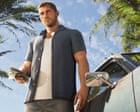
Last week the launch of Grand Theft Auto VI provoked reactions across US sports media and English football circles, with ESPN’s Stephen A Smith and Brentford forward Bryan Mbeumo among those criticised or questioned over links between late-night play and on-field performance.
The controversy widened on social media after Mbeumo posted an image of GTA VI with the word “historique” after midnight on Thursday, while the Odd Sport account predicted Chelsea, Brighton and Manchester City would all lose because younger squads might be more focused on Vice City; by Monday that forecast had been liked tens of thousands of times. On television Stephen A Smith reacted strongly: “They miss games, the cheque’s still clearing. And you’re trying to tell me they got this kind of addiction to a video game that they sitting there with their thumbs looking like Donald Trump?” The Houston Rockets’ Steven Adams also warned the launch would cause performances across leagues to “plummet”’ in November.
Academic work has begun to probe whether gaming-induced mental fatigue affects elite sport. A 2020 study of 25 professional footballers in Brazil split participants into three groups — watching adverts, playing Fifa 18, or using social media — before a 90-minute match and found passing accuracy fell by 6.5% in the video-game group compared with the control group, despite similar numbers of passes overall.
A 2022 systematic review of eight studies examining video games and mental fatigue reported a “significant impact” on technical performance, with footballers missing more tackles and making more errors while passing skills appeared unaffected. Other research cited in the debate found that mental fatigue is associated with longer fixation on opponents and less attention to teammates, contributing to poorer decisions, and that fatigued athletes perceive physical effort as harder.
John Kiely, an Irish sports scientist who recently studied mental fatigue among Brighton’s first-team players and who has worked with Egypt’s World Cup squad in 2018, Ireland’s rugby team, and UK Athletics, urged caution in applying lab results to elite competition. He co-authored a paper reviewing 28 recent academic papers on football and mental fatigue and said: “The studies are way too lab-based at the moment,” adding: “And it’s very hard to extrapolate them to what will happen with a seasoned professional player who’s used to high-stress environments.” Kiely also noted individual differences, citing monitoring of Brighton’s players over a season to track mental fatigue.
Kiely questioned whether skills developed in esports transfer to field performance at an elite level, saying: “The chances that the reflexes you learn on an online game are going to transfer to the field if you’re already elite are nonexistent.” He highlighted eye-tracking as a promising tool for assessing fatigue-related changes in visual behaviour: “If you track something, be it a ball or whatever on a screen, are your left and right eyes moving simultaneously, or is there a little bit of a lag? Well, those lags increase with fatigue.”
On practical policy, Kiely recommended a measured response rather than bans, provided gaming does not disrupt sleep: “I wouldn’t see anything too much wrong with it, providing it doesn’t stimulate a player so much that they stay awake the night before a game and they lose sleep,” he said. “That’s one of the biggest dangers. Because losing sleep is a clear performance decrement and a clear injury risk promoter.” He added: “So my advice is play for 40 minutes, get up, take a walk, get some fresh air and do some eye exercises, and you’ll be fine.”
The immediate implication for clubs and players is clear in the source material: allow gaming in moderation but guard against late-night marathon sessions that cost sleep, follow the practical steps Kiely outlines, and balance leisure choices with recovery routines. Place gun in holster, put pedal to floor, and enjoy the next chapter of GTA. Just remember to go for a walk and do your eye exercises afterwards.
