Gukesh Dommaraju faces Javokhir Sindarov in Geneva as world championship opens from 24 November to 12 December

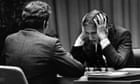
Gukesh Dommaraju and Javokhir Sindarov meet in Geneva from 24 November to 12 December in the world chess championship, the youngest ever pairing to contest the title, with the match staged at the Fondation Martin Bodmer in Cologny. Ahead of the best-of-14 contest, this report revisits 22 classic games from the competition’s 140-year history.
The world championship traces its formal origins to the 11 January 1886 match between Wilhelm Steinitz and Johannes Zukertort — a first-to-10-wins contest played across three US cities over 78 days for a prize fund of $4,000 — and names such as Ruy López de Segura, Gioachino Greco, François-André Danican Philidor, Louis-Charles Mahé de La Bourdonnais, Alexander McDonnell, Howard Staunton, Adolf Anderssen, Mikhail Chigorin and Paul Morphy are cited in the record of the game’s evolution. The Geneva match pits India’s Gukesh, who became the youngest undisputed world chess champion in history when he defeated China’s Ding Liren in December 2024 aged 18, against Uzbekistan’s Javokhir Sindarov, with both players aged 20 when play begins. The match is scheduled from 24 November to 12 December at the Fondation Martin Bodmer, overlooking Lake Geneva, and is the newest chapter in 140 years of world-title contests.
The title is decided over 14 classical games with one point for a win and a half-point for a draw; the first to 7½ points wins. Time controls are 120 minutes for the first 40 moves, followed by 30 minutes for the remainder of the game, with a 30-second increment per move starting at move 41, and players cannot agree to a draw before Black’s 40th move. If the match is tied 7-7 after 14 games, tiebreaks will be played in this order: four rapid games (15 minutes plus 10 seconds), then two rapid games (10 minutes plus five seconds), then two blitz games (three minutes plus two seconds) and, if still tied, single blitz games alternating colours until a decisive result.
The public schedule begins with media day and an opening ceremony on Sun 22 Nov and includes Game 1 (Gukesh–Sindarov) on Tue 24 Nov followed by alternating colour pairings through Game 14 (Sindarov–Gukesh, if necessary) on Fri 11 Dec, with tiebreaks and a closing ceremony on Sat 12 Dec if required. Rest days are on Fri 27 Nov, Tue 1 Dec and Wed 9 Dec; all games start at 3pm local time, 2pm GMT, 9am US east coast and 7.30pm in India. The overall prize fund is $2.5m (£1.9m); each player will receive $200,000 for each game won, including forfeits, with the remainder split equally, and if the winner is decided on tiebreakers the champion receives $1.3m with the runner-up $1.2m — the same split applies if the match finishes 7½–6½ with 13 decisive games or 8–6 with 14 decisive games.
Gukesh is described in the file as an aggressive player who creates sharp, tactically complex positions; the Chennai-born grandmaster became champion by defeating Ding Liren in December 2024 aged 18 but has since “struggled badly for form,” dropping to No 26 in the world rankings from a career-high No 3 after an extended run of underwhelming performances. Sindarov, roughly six months older than Gukesh, finished unbeaten with six wins and eight draws at this year’s eight-man Candidates tournament in Cyprus against a field that included Fabiano Caruana, Hikaru Nakamura and Anish Giri; he has climbed into the world’s top five after a breakthrough year that included winning the 2025 Fide World Cup in Goa and is the first player from Uzbekistan to challenge for the title.
The accompanying selection chronicles 22 memorable games across world-title history, beginning with Steinitz’s positional work in the inaugural match and moving through defining contests. The file highlights Emanuel Lasker capitalizing on Steinitz’s overaggression, Garry Kasparov’s observation that, “In a difficult position, he succeeded in setting his opponent the sort of complex problems, of a sort that chess would not see again until the latter half of the 20th century,” José Raúl Capablanca’s 68-move win that signalled a stylistic shift, and Alexander Alekhine’s dethroning of Capablanca and the anecdote recorded by Hans Kmoch: “It is incredible how long Alekhine remained on top despite his pernicious addiction to alcohol,” including Kmoch’s memory of a trunk containing “nothing but liquor bottles – a traveling bar.”
Further entries note Max Euwe’s “Pearl of Zandvoort,” the Botvinnik–Bronstein encounter featuring the 57 Kc2?? error labelled the Blunder of the Century, Smyslov’s queen sacrifice 19 Qxe4!! in their trilogy, Tal’s speculative knight sacrifice 21...Nf4 that provoked such noise the game was moved to a back room, and Petrosian’s 10th-game reversal against Spassky. Later modern highlights include Bobby Fischer’s Game of the Century in which the 29-year-old American played 1 c4 for only the third time in a serious game and a C.H.O’D. Alexander appraisal: “This game was notable for two things,” the first being Fischer’s Queen’s Gambit usage and the second that “he played it to perfection,” leading to Spassky’s resignation after 41 moves.
The selection closes with late 20th- and early 21st-century title confrontations: Kasparov’s 13-11 victory over Karpov in Moscow after their abandoned 48-game 1984 match, Vladimir Kramnik’s 8½-6½ defeat of Kasparov at the Riverside Studios, Peter Leko’s 7-7 drawn defence of Kramnik in which Kramnik said, “I had to give everything, especially at the end, to win against such an opponent,” and Vishy Anand’s use of the Meran Variation and capitalisation on Kramnik’s 29 Nxd4?? to open a 3½–1½ lead en route to defending the title he’d won in 2006. The file also recounts Magnus Carlsen’s admission to the Guardian that he believed defeat was “certain” after losing the eighth game to Sergey Karjakin before levelling the match and retaining the title in rapid tiebreaks, Carlsen’s 136-move win over Ian Nepomniachtchi in the longest game in world championship matchplay history, and Ding Liren’s eventual title win in a tiebreak playoff after never leading in their three-week match to become the 17th man to capture the world chess title and the first from China.
Every game from the Geneva match will be available live: the Guardian will provide move-by-move commentary, expert analysis and reaction throughout the three-week match, and fans can watch every game live on Fide’s official YouTube and Twitch channels; the match will conclude with tiebreaks and a closing ceremony on Sat 12 Dec if required.