Hajime Moriyasu departs Japan after eight years as Asian Cup postponement ends his tenure

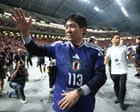
Hajime Moriyasu has left his role as Japan’s national team head coach in November 2026 after eight years in charge, the end coming early following the Asian Cup’s postponement from January 2027 to December. The 58-year-old departed this month having managed Japan in 113 games.
Japan’s coaching position was unstable in the eight years before Moriyasu’s 2018 appointment, with six different coaches during that period. Javier Aguirre lasted 10 games before leaving in 2015 after being named in a Spanish anti-corruption investigation; Vahid Halilhodzic departed in April shortly before the World Cup amid clashes with the federation and threatened to sue JFA chief executive Kozo Tashima, alleging illegal dismissal. Under Akira Nishino at the 2018 World Cup Japan advanced from their group by receiving fewer yellow cards than Senegal.
Under Moriyasu, Japan have been widely regarded as the strongest team in Asia and have lifted standards and confidence within the squad. After Japan became the first team to qualify for the last World Cup in March 2025, captain Wataru Endo told fans it was no longer enough to be content with a place in the tournament but to look to win it, and Moriyasu spoke of aiming for the last eight.
At the most recent World Cup Japan progressed through their group to meet Brazil in the last 32; in Houston the South Americans were second best in the first half but Japan sat back after the break and lost in stoppage time, a fifth failure to get past the first knockout game. Japan’s earlier 2022 exit to Croatia on penalties was cited as reinforcing perceptions that Moriyasu could be overly cautious in tournament knockout situations.
Japan’s continental record under Moriyasu has been mixed: there were failures at the Asian Cup in 2019 and a quarter-final exit in 2023 described as a genuine disappointment, yet the side also registered notable results against world-class opponents. The 3-2 victory over Brazil this month was the second win over the South Americans in 13 months, and during that period Japan also became the first team from Asia to beat England; by contrast, Neymar scored all four in a 4-0 Brazil win over Japan in 2014.
The broader Asian scene has featured coaching turmoil among rivals, a dynamic highlighted alongside Japan’s relative stability. South Korea took the World Cup with Son Heung-min, a Paris Saint-Germain midfielder in Lee Kang-in and Bayern Munich’s centre-back Kim Min-jae but were described as being awful and in meltdown thereafter; Iran supporters were reported as wanting the back of Amir Ghalenoei, Saudi Arabia fired their coach just before a World Cup, and Qatar were due to part company with Julen Lopetegui after an underwhelming spell.
Moriyasu has been linked with a move to Europe and his CV was noted to include three J.League titles, but the view expressed in the original report was that, not being European or South American, he is unlikely immediately to land the largest jobs or top leagues. The piece also said there has to be a first appointment in Europe, then further opportunities could follow, and that debate over his national-team record exists even as some hope he can become a pioneer for Japanese and Asian coaches in Europe.
He had been expected to remain until February to attempt to finish his tenure with a trophy and to hand over to Go Oiwa; with Moriyasu’s early departure, the responsibility for taking the team beyond the point he reached now falls to his successor.