Hardik Singh: the midfielder whose vision often outpaces his teammates

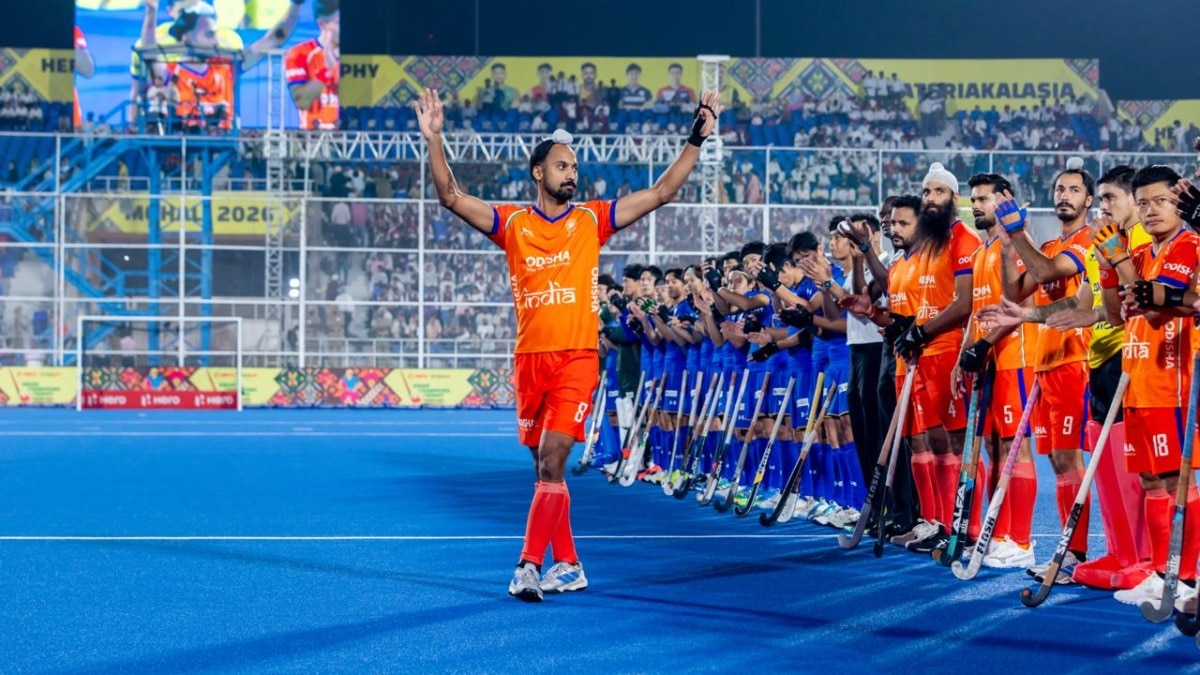
Hardik Singh produced moments of dazzling midfield play for India in the Asian Champions Trophy final against Japan, according to a profile published on 2026-11-19. The piece sets out the contradiction of a player whose stick work and vision frequently create breath-taking opportunities that teammates sometimes fail to convert, leaving spectators alternately inspired and exasperated.
The article traces Hardik’s evolution from a low, deliberate style at his 2018 World Cup debut to a more expansive, commanding presence described as a “classic schooner,” and notes that he is widely seen as the central figure of India’s midfield. That shift has made his role more consequential: when his timing aligns with teammates the team is lifted, and when it does not his creativity can appear wasted. The profile frames this duality as central to understanding both his value and the frustration he engenders.
On the field, Hardik’s movement and ball skills are presented as unpredictable and multi-dimensional: he can accelerate into the circle, run parallel to open space, or withdraw the ball to create delivery angles in a fraction of a second. The article points to small visual cues — facial expressions and the curve of his stick — as indicators of his intent, recalling how opponents once read Dhanraj Pillay by watching his face and stick to anticipate sudden directional changes.
Using the Asian Champions Trophy final against Japan as an example, the piece describes moments when Hardik slipped past defenders and appeared in the striking circle while opponents and stands were looking elsewhere, at times seeming almost alone on the pitch. That solitude is presented not as a critique of teammates but as a measure of how far his play can run ahead of collective patterns. The profile draws a direct line to Sardar Singh’s era, noting the similar mismatch between a conductor’s tempo and the forward line’s readiness, and records that Hardik idolised Sardar and chose the number 8 jersey for that reason: “I can still remember when Paaji was playing HIL back in 2014 or 2015,” Hardik recalls. “We were sitting in the stadium and not watching anyone else. We were just watching Paaji - how he moves, how he talks, everything. Even I’m wearing number 8 because I want to be like him.”
The piece situates Hardik’s role amid recent collective strains: a World Cup campaign that ended with a failure to reach the last four, narrow tactical lapses against England and missed execution against the Netherlands, and the pressure of Olympic qualifying at the Asian Games. It says senior stalwarts are retiring and the road to the 2028 Los Angeles Olympics requires generational change, and quotes Hardik on the toll of a packed calendar: “In hockey, playing back-to-back high-intensity tournaments is torture for your body and for your mind.” He also recounts his own technical recalibration: “Two years ago, I was distributing balls, and it was not very perceptive - it wasn’t always accurate. I told myself that I have to be the calmest and most composed player on the field.”
The profile recounts an India-Pakistan match in which a 3-0 lead slipped to 3-3 in the fourth quarter and cites Hardik’s candid reaction: “I’m not going to lie, I felt scared,” he admits. It records how he relied on rehearsal and process to steady himself: “Suddenly, out of nowhere, something clicked: I have done this in training so many times. I just have to do it twice or thrice. You need to trust your training. It’s all about the process, never about the outcome.” Reflecting on his on-field maturity, he adds: “It doesn’t work like that at all,” he says now. “You have to find your own moment, and it will come. You just have to play normal - if it’s a five-meter pass, play the five-meter pass -because you will find your time in the match where you have to do your own thing.”
Hardik’s statements on leadership and accountability are recorded in full: “I like to be on the back foot and be the guy doing all the dirty work for the team,” he insists. “I didn’t start my hockey journey because I wanted to be captain. It never came into my mind. I don’t need a captain’s band to bring what I bring to the team. If someone else becomes captain after Harmanpreet, it’s completely fine.” He describes a dressing-room approach that invites feedback: “If you feel like you’re doing great as a hockey player and nobody can say anything to you, you cannot improve,” and recounts telling forwards in tournaments: ‘Tell me where you want the ball, I will pass it there. If I’m not doing something right, tell me. We are only doing this for you guys, and nobody is going to take it personally.’”
The article adds personal background to the portrait, stating Hardik is the son of a police officer who struggled in the classroom and found refuge in hockey, and quoting him directly: “Hockey was the only way to enjoy.” It records small domestic details — he admits to snapping at his mother over a winter coat then apologising five minutes later — and describes his mother’s sacrifices, including marrying at eighteen and sending him to a sports hostel despite village scepticism.
The profile concludes that the march toward the Los Angeles 2028 Olympics will demand more than individual brilliance: as senior figures step away, Hardik’s defensive tracking, positional discipline and emotional steadiness will be tested, and his challenge will be to pull the rest of the team onto his tempo so “when the gates of heaven finally swing open, he isn’t standing there alone.”