“I had no love for myself … now I have peace”: Ryan Caldwell on rebuilding life after addiction, prison and concussion

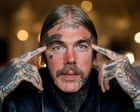
Ryan Caldwell, the retired Ireland second-row, spoke in Belfast on a rainy morning about his recovery from addiction, depression and incarceration and his new role teaching meditation and breathwork in an interview published on 1 September 2026.
Caldwell, who played for Ulster, Bath and Exeter and earned two full international caps, is 6ft 7in, heavily tattooed and turns 42 on Tuesday, the interview notes. He is preparing to publish a memoir, White Lines: a Rugby Life Broken and Rebuilt, and describes the word tattooed across his fingers as "Carefree".
He traces some tattoos to his youth, saying the first at 18 was Sanskrit for "strength" and recalling his mother's tears: "Och, Mummy, it’s only skin deep." Above one eyebrow he has the words "no love," which he says reflected how he felt at the time: "When I did that tattoo I felt very low and had no love for myself. In that state, it’s hard to see the love other people have for you."
Caldwell recounts his early attachment to rugby’s physicality and the culture that discouraged vulnerability, writing that "despite the hard-man exterior, I was a sensitive soul. I felt things really deeply. Only looking back do I see that I had no language for feelings." He describes a training incident in the buildup to the 2007 World Cup when Paul O’Connell punched him, and says of the aftermath: “I nearly died … I was out cold. The punch had burst my cheek open – one of my back teeth punctured straight through it. I was swallowing blood, gurgling, and then started fitting on the pitch. I stopped breathing. Almost gone. They had to resuscitate me right there on the grass. Gary O’Driscoll, the team doc, sprinted over and cut the jersey open. I remember flashes of his face – panic in his eyes – his hands pressing on my chest as I came around. Someone roared for an ambulance. It was carnage.” He says he bears no ill-will towards O’Connell.
Caldwell describes selection disappointments under Declan Kidney, including being told he was in the squad to play New Zealand in November 2008 only for Kidney to call two days later to say his name had been announced by mistake: “I was still wet behind the ears, so I didn’t challenge him on it.” After moving to Bath in 2011 he returned to form and was, he says, later told by Kidney he was back in contention before being told again that selection was not possible because he was playing outside Ireland; he was subsequently voted Bath’s forward of the season.
Injuries intensified as his career progressed. A surgeon told him: ‘I don’t know how you’re playing professional sport.’ He says injections and pain management allowed him to continue until a concussion he could not recover from led to retirement in 2014, aged 30. He admits to escalating drug use in that period, saying he began taking cocaine, eventually had his own dealer and recalls an episode in which Rob Baxter may have seen him in a toilet cubicle; the exchange he recounts was: “I was like: ‘God, did he cotton on? He must have.’ I remember flushing the chain and Rob was standing there. I was like: ‘All right, Rob?’ And he goes: ‘All right?’ I just walked out.”
After retirement, Caldwell says the last concussion left him with months of "fogginess" and that his memory remains impaired: “Even now my memory is not the best.” He says he is aware of legal action taken by players but that: “I’m focused on the positive stuff I’m doing now. It takes so much mental energy looking for compensation and it’s a wee bit out of alignment with my life now.” He recounts being sent to Maghaberry prison near Lisburn twice, coming close to taking his life in his cell until a prison warder checked on him, and receiving help from Paddy Johns, the prison dentist. Faced with an attempt by another addict to introduce him to heroin, he decided “enough was enough” and went to the Amazon jungle, where he took the first of multiple doses of ayahuasca.
Caldwell now leads retreats and runs breathwork and meditation sessions, saying he works with "women going through menopause, people dealing with grief, depression and anxiety" and that the retreats last three and four days during which participants disconnect from daily life and their phones. He says his relationship with his parents has repaired: his partner Tara and their two children recently hosted his mother and father, aged 70 and 73 respectively, and he recounts a holiday in Portugal where he gave them a microdose that left them "chilled out".
He says he still feels a connection to rugby after attending Ulster’s match against Racing at Ravenhill last December and describes his current state as: “I have this underlying peace even when there are challenges in life. I don’t have a lot of material things but I’ve never felt as rich as I do now.”
In the UK and Ireland, Samaritans can be contacted on freephone 116 123. In the US, you can call or text the National Suicide Prevention Lifeline on 988, chat on 988lifeline.org, or text HOME to 741741 to connect with a crisis counselor. In Australia, the crisis support service Lifeline is 13 11 14. Other international helplines can be found at befrienders.org.