I started playing pickleball in my 50s — experts’ beginner tips and recommended gear

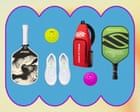
I began playing pickleball in my 50s at Court 16, a New York indoor tennis and pickleball club, and compiled advice from coaches and pro players on equipment and basics; the article was published on 2026-08-07. I describe how I learned the game and list the items experts recommend for new players.
I had long dismissed pickleball as “mini tennis” before taking a beginner class at Court 16 and working with coach Dylan DeBiase. “Pickleball is simply a great way to explore a thriving and growing community of all ages,” DeBiase told me. After that introduction I asked DeBiase and several other professionals for their suggestions on the basic gear that beginners need.
On paddles, physical therapist John Gallucci Jr advises: “When choosing a paddle, prioritize a weight and grip size that feels comfortable and doesn’t require excessive force to control, especially if you’re a beginner or prone to arm injuries.” Kyle Hermetz recommended an affordable Franklin Sports starter bundle—two lightweight paddles and two outdoor balls for just under $50. Daniel Gottfried suggested a wide-body, square-shaped paddle for a larger sweet spot; a Joola fiberglass model fit that description and delivered extra power in practice. Scott Heller described one direct-to-consumer paddle as having “a cult following” and said, “This paddle has a cult following and can only be purchased direct and online,” Heller says, “but the price point is well below the higher-end more recognized brands.” For players willing to spend a bit more, Selkirk’s Control paddle was noted as offering upgraded spin and, in Gallucci Jr’s words, “It has a large sweet spot, excellent control and is arm-friendly,” and Selkirk says it first introduced Amped technology in 2017.
There was consensus on balls: “The ball of choice is the Franklin Sports X-40,” Heller says. “It is the official outdoor play ball and is used in the US Open of Pickleball.” On footwear, Gottfried warned that “Movement is everything in pickleball. Running shoes are built for straight-line movement. Pickleball is lateral, quick and reactive,” and recommended court-specific shoes for side-to-side support. Heller praised an affordable Wilson pickleball shoe, noting: “It feels tight when first putting on, but after an initial three- to four-hour session, it’s comfortable enough to wear in the future,” and he highlighted the shoe’s roomy toe box. DeBiase and Heller both recommended Babolat footwear; DeBiase said, “They’ve become an industry leader in that space with former world No 1 Ben Johns using their footwear.” Gallucci Jr suggested Asics FFs for lighter, faster feel and strong mid-foot support, and I found extra cushioning comfortable; I also noted ON shoes’ Cloudtech cushioning adapted well to court use.
Experts urged eye protection and practical carry and clothing options. Gottfried emphasised proximity and risk: “You are only 14 ft away from players hitting a hard ball,” he said. “Deflections happen. Sometimes it even comes off your partner’s paddle. Solid eye protection is smart at every level.” Gallucci Jr recommended eyewear that meets ASTM F803 impact standards and pointed to Onix glasses that meet that spec; Gottfried suggested a lens-free, impact-tested frame and added, “Players can focus on the game without visual obstruction,” he says. For carrying gear I found a compact crossbody that holds a paddle, a ball and a water bottle plus a front zippered pocket, and a Beis nylon tote that fits paddles, shoes, balls and eyewear and comes in three colours including Limone. Clothing picks included a soft Le Pickle Club crewneck, Adidas shorts featuring Climacool and 100% recycled polyester that my husband and two sons favour, and a Selkirk long-sleeved Henley in a spandex-polyester blend that dries quickly and provides UPF50 protection.
Pickleball’s basic rules and court details are straightforward: it uses a hard paddle and a plastic ball, is played on a 44ft long court, serves must be underhand, and the double bounce rule applies on returns; games are played to 11 points with a two-point margin required to win. Compared with booking tennis courts, one practical advantage I found is that you can show up at one of the many outdoor courts and play whenever you’d like. Lauren Gould contributed additional research.