India’s goalkeeping void exposed as Belgium beat them in World Cup shootout

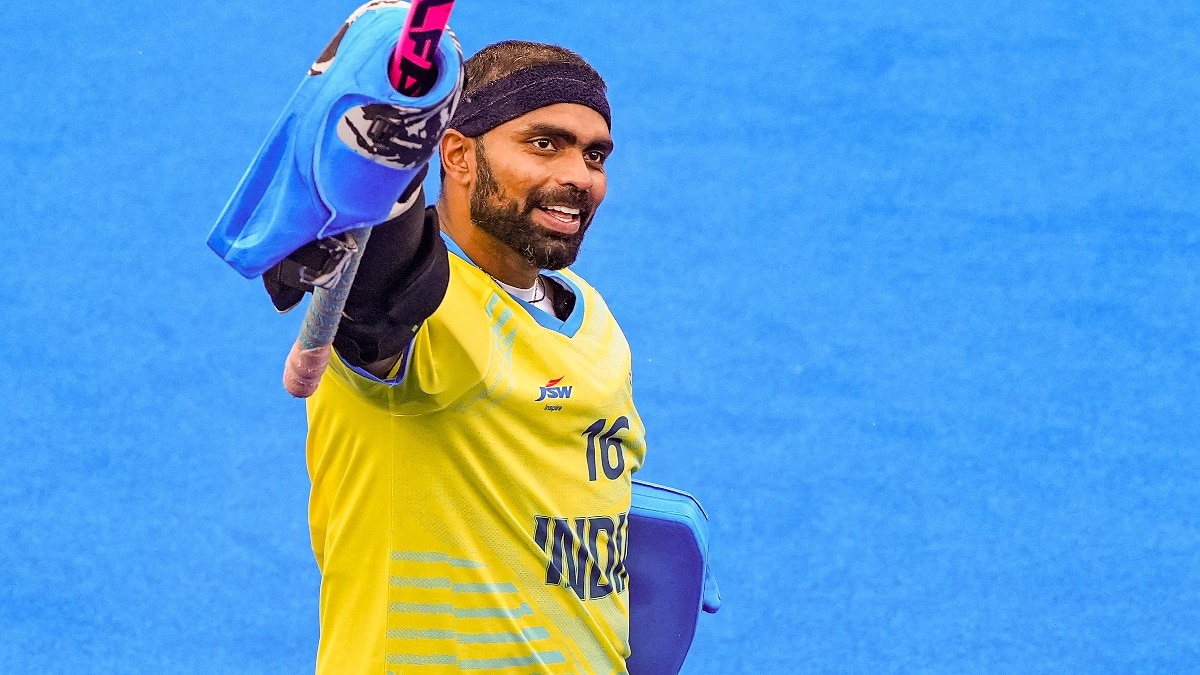
When India’s men met Belgium in the Hockey World Cup 7th-8th place playoff in this year’s tournament, the match went to a penalty shootout and India, with Mohith in goal, lost after Vincent Vanasch produced two sensational saves when it mattered most to power Belgium to victory. The shootout lacked the familiar security associated with PR Sreejesh, whose absence was widely felt.
PR Sreejesh’s role in past high-pressure moments is part of the context for the current debate: in his final campaign at the Paris Olympics he played a starring role in India’s quarter-final shootout win over Great Britain after India had played with 10 men for more than 40 minutes. Since his retirement, India’s tournament defence conceded 19 goals, leaving them as the sixth-worst defence in the competition.
Former Dutch goalkeeper Pirmin Blaak, who worked with the Indian women’s team, said India’s current options lacked an X-factor. "I watched the men's team also and there is a huge gap after the legendary PR Sreejesh retired. The big-status goalkeeper. Young goalkeepers have come but they lacked the quality to push India to the next level," said Blaak, while Mohith and Suraj Karkera had produced some good performances during the tournament.
Former Indian goalkeeper Romeo James had been vocal about shortcomings in the goalkeeping department before the World Cup and linked the issue to talent and exposure. "It is related to talent, you know. Everyone cannot be Sreejesh," James said. He added that camps and practice alone would not suffice: "You just can't expect hiding in Bangalore and having camp there for two and three months, it will give them the exposure. Just practice won't do so. You have to give them proper match experience."
James also stressed the time required to develop a top goalkeeper and used Sreejesh’s pathway as an example. "It takes time to develop a goalkeeper. It takes at least 6 to 7 years. Even when Sreejesh came, he came into 2006 for juniors and 2008, he made his debut for the senior team, and then when he started playing well was somewhere in 2014 or 2015 or 2016. So it took him years." Meanwhile, India have used Krishan Pathak and Suraj Karkera in the Asia Cup in 2025, Pathak appears to be out of the picture, and Mohith has 20 caps.
James highlighted the leadership role a goalkeeper must assume behind the defence and recalled his own early reluctance to direct senior players. "What Sreejesh was doing was to call the proper defence and guide them," said James. "Being a goalkeeper, when I started playing for the Indian team, even I was reluctant and hesitant to call out the seniors in front of me." He added: "Later on, when you are into it after 6 months or 7-8 months, when you're sure and when you have played enough, then you can call with confidence."
On remedies, James proposed both immediate and long-term measures for India’s goalkeeping pipeline. "See, there are short-term and long-term options. Short-term will be to identify those who are playing right now in the Indian team, about 7-8 goalkeepers. You train them and then you see who is the best, you know, and give them exposure." He continued: "And long-term, then you train those sub-junior guys, you know, trained under a goalkeeper who can teach them modern hockey basics, you know. If your basics are right, right from some junior level, and then it will take eight years or 10 years, but you have to start from somewhere. You have to start," and added that the Hockey India League should give Indian goalkeepers meaningful game time: "In Hockey India League, our goalkeepers should be given preference. I mean, what is the use of having a Hockey India League when you're not exposing our goalkeepers and our drag flickers?"
India have bigger assignments ahead, with the Asian Games and the road to the Los Angeles Olympics waiting around the corner, and goalkeeping remains one department that cannot be ignored.