Indian Army’s Mission Olympic Wing fuels 20-medal contribution at Asian Games 2026

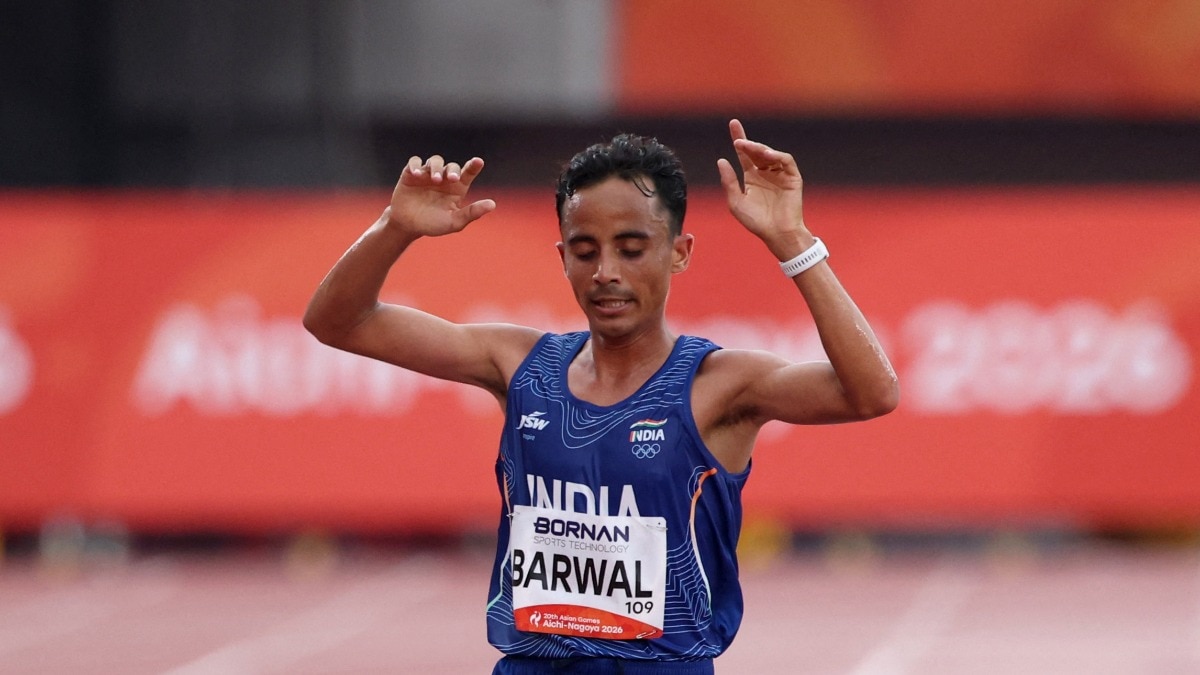
Indian Army sportspersons won 20 medals for Team India at the Asian Games 2026, claiming six gold, eight silver and six bronze. Their haul accounted for nearly one-fourth of India’s overall tally of 85 medals and almost 29 per cent of the country's 21 gold medals.
The Indian Army's Mission Olympics Wing operates within the Director General Integrated Training framework and supports the service’s sports programmes. Launched in 2001, Mission Olympics established a structured pathway from talent identification to elite international performance. A central element is the Army Sports Institute (ASI), Pune, which was raised on 1 July 2001 under the programme to provide systematic training, professional coaching and sports science support. ASI provides specialised infrastructure and coaching across disciplines including archery, athletics, boxing, diving, fencing, weightlifting and wrestling.
Naib Subedar Gulveer Singh was one of the standout performers, winning three individual athletics medals: silver in the 1,500m and 10,000m and bronze in the 5,000m. Naib Subedar Neeru Dhanda secured two gold and one silver, including the individual women’s trap title with an Asian-record score of 28 and became the first Indian woman to win an individual Asian Games gold in trap. These results were achieved under the broader support framework provided by the Mission Olympics Wing.
Havildar Sawan Barwal claimed marathon silver while setting a national record, ending India’s 44-year wait for a medal in the event. Naib Subedar Sarvesh Kushare won high-jump silver after a 56-year gap. In rowing, Naib Subedar Salman Khan, alongside Satnam Singh, delivered India’s first Asian Games medal in men’s double sculls.
Subedar Dhiraj Bommadevara set national and Asian Games qualification records in men’s recurve archery. Havildar Kamaljeet Singh, partnered by Suruchi Singh, won mixed 10m air pistol gold with an Asian Games record score of 484.6. The Army's six gold medals at this edition were double its tally at the previous Asian Games.
Since the launch of Mission Olympics in 2001, the Army has expanded its sporting ecosystem and training reach. About 9,000 sportspersons have been trained across 28 Army sports nodes, supported by 18 Boys Sports Companies, two Girls Sports Companies and a dedicated Paralympic Node. Those feeder structures are used to identify promising talent at an early stage and develop athletes for higher levels of competition.
The objective remains to identify talent early, nurture it systematically and prepare sportspersons to deliver for India at the Asian Games, Commonwealth Games, Olympic Games and other major international competitions. From identifying potential to producing podium finishes, Mission Olympics represents the Indian Army’s sustained contribution to India’s sporting excellence.