Indian women win Asia Cup in Dubai and retain Asian Games gold in Aichi-Nagoya amid political focus


Over the last 10 days India’s women’s cricket team won the Asia Cup in Dubai and then defended their Asian Games gold in Aichi-Nagoya, Japan, securing two major tournament victories in quick succession. Those on-field successes have unfolded alongside intense attention on televised ceremonies and cross-border handshake incidents.
Women’s cricket in India has long had to prove its place relative to the men’s game, seeking pay parity, access to prime venues and equitable broadcast treatment. Despite the recent triumphs, the article notes that “the needle for Indian cricketing culture has barely moved between September 2025 and September 2026,” a comparison that it says diminishes the different journeys of the men’s and women’s teams. The piece argues broadcasters and administrators have continued practices that kept the women’s game secondary until its recent rise in public profile.
In the Asia Cup final India defeated defending champion Sri Lanka, with Deepti Sharma finishing the tournament as the leading wicket-taker with 14 dismissals — the most by any bowler in the competition. Smriti Mandhana surpassed India’s Mithali Raj to become the leading run-scorer in international cricket and moved ahead of Australia’s Meg Lanning for the most centuries, achievements the article says received less attention than the post-match non-presentation of the trophy. Cameras lingered on the VIP stand, and the appearance of Asian Cricket Council chairman Mohsin Naqvi — described in the article as also Pakistan’s Interior Minister and the Pakistan Cricket Board’s chief — and his conversation with BCCI Secretary Devajit Saikia drew heavy broadcast focus.
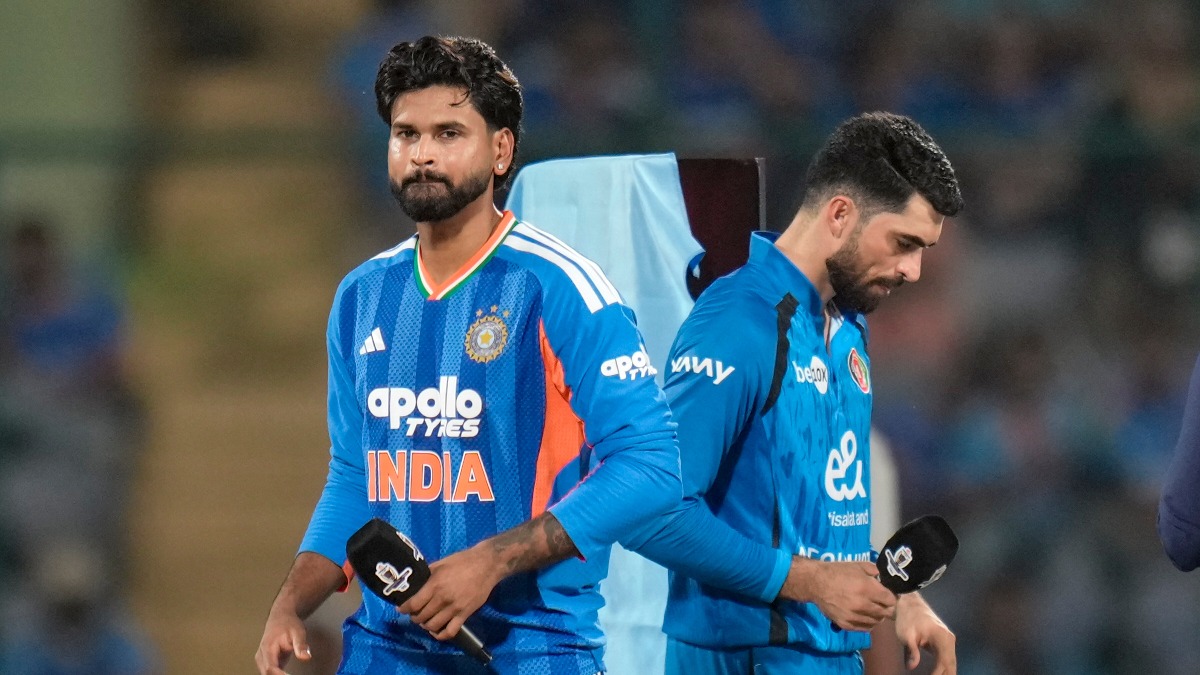
The narrative links recent women’s-team ceremonies to earlier incidents in men’s cricket: following the 2025 Pahalgam terrorist attack and a subsequent military skirmish between India and Pakistan, the Indian men’s Asia Cup team faced calls for a boycott and their captain Suryakumar Yadav refused to shake hands. Spectators later cheered an imaginary trophy lift when the men’s team withheld accepting the winner’s trophy from Naqvi, an episode the article says Prime Minister Narendra Modi described as "Operation Sindoor on the games field."
Journalists pressed similar handshake questions on the women’s side ahead of the ODI World Cup campaign, eliciting Deepti Sharma’s response: “We are not focusing on the Asia Cup at the moment... our focus is on this series.” On the field, the Indian women did not shake hands with Pakistan in that match; the article records that in June 2026 during the T20 World Cup in England Harmanpreet Kaur and her team again refused to shake hands with the Fatima Sana-led Pakistan side. It adds that Naqvi was not part of the medal presentation in Dubai and that spectators reacted with the chant, “What the men had started, the women have continued.”
The piece says the women’s team has added a large new audience in the past year, and that this new support carries an implicit expectation that women’s players will inherit the political legacy of Indo-Pak fixtures shaped by the two cricket boards. It notes differences in fixture history: Indian and Pakistani women have never played a bilateral series, first met in 2005 and have met only in international tournaments in fewer than 30 matches, where India has maintained comfortable dominance; by contrast, Indian and Australian women have played each other more than 100 times, including in Test matches.
The article states the no-handshake stance is a BCCI decision that applies to all teams under its jurisdiction when facing Pakistan, and argues this choice allows the board to preserve emotionally and commercially valuable international fixtures despite lacking regular bilateral ties. It also references India’s earlier refusals in the early 2000s to participate in tri-nation series and Asian Test Championships following the Kargil War and unrest in the Kashmir valley as precedent for using fixture decisions to reflect wider national contexts.
As the Indian women’s team accumulates more trophies, the article concludes it is entering a public sphere where on-field cricket and political gestures are increasingly intertwined, and that the BCCI and political actors are now eager to exploit televised moments — including instances where Indian players do not shake hands — for the cameras.