Jr. NBA pivots to under-16s at ACG 3v3 event in Delhi, urges year‑round play and coach investment

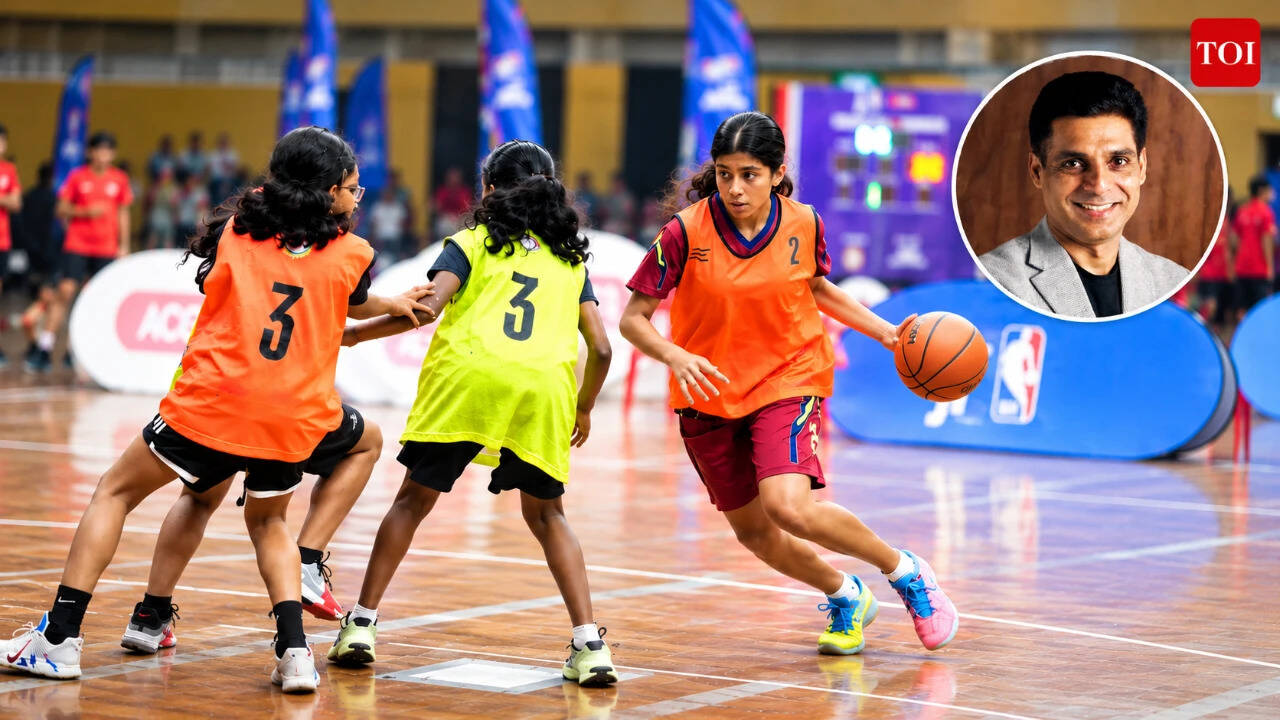
Jr. NBA officials, led by NBA India Country Head Sunny Malik, outlined a shift to under-16 competition and called for year‑round play and improved coaching at the ACG Jr. NBA 3v3 National Tournament in Delhi last week. Malik said the move aims to raise standards after Indian school teams returned from international exposure earlier this year and identified physical and technical gaps.
Malik recounted feedback from players who took part in the Rising Stars Invitational in Singapore, quoting them directly: “They said that the level of competition showed us that we need to improve a lot more. We ended up lacking in stamina and endurance. That’s what those kids told me,” Malik, NBA India Country Head, told TimesofIndia.com on the sidelines of ACG Jr. NBA 3v3 National Tournament in Delhi last week. He added the players pledged to address those weaknesses ahead of another edition: “They said that if we are the best team in India next year and we participate in RSI next year, we assure you that we will go to at least semis. Because we will work on our stamina, we will work on our endurance and we will work on the weaknesses that we saw through the entire program,” he said. “That is what we want kids to know.”
The 2026 ACG Jr. NBA 3v3 series has been upgraded from under-14 to under-16 and runs across 10 cities after beginning in September, with national finals scheduled for December. Delhi logged 270 team registrations from 118 schools — 193 boys’ teams and 77 girls’ teams — as teams from established programmes and ad hoc school setups competed in the city stage.
Malik framed the tournament as a measure of how teams compare beyond their own environments, saying: “The overall exposure and learning that they can get through this program, playing against the best teams coming in from a city or the outskirts of that city, is the main objective is.” He contrasted schools with structured basketball programmes and those without, arguing structured programmes teach positioning, passing and time management while ad hoc efforts rely on individual learning: “And that's where I see the difference between a school having a basketball program and school not having a basketball program because, you know, then they are running ad hoc, wanting to work not through a strategy but through their individual learning,” he said. “Whereas a school having a basketball program teaches you about this positioning, how do you pass, how do you ensure that you are able to score a bucket in that time that you have got.”
On court, Malik pointed to strategy prevailing over size in the half‑court 3v3 format with a 12‑second attack clock, describing a girls’ match where one team failed to find positions while the other exploited gaps: “Somewhere these kids are playing better because they are not bigger than their opposition; they [opposition] are playing better because their strategy is better,” Malik said.
Malik also stressed the physical and mental demands revealed by international competition, saying: “Personally, when I saw a lot of these teams playing at RSI, I felt the one thing that a lot of our teams have to work on is endurance, stamina building, mental conditioning,” he said. “Playing against the best in the world requires that toughness, that endurance, that you will continue for those four quarters at your peak.” He urged greater investment in coach development: “Coaches development is one area which probably, and that's my personal take, gets ignored sometimes,” he said. “But that's a very, very important part of the overall ecosystem development.”
Malik described the Jr. NBA’s existing coach‑education work, noting international instructors such as Natalia André have led clinics and that the programme in India has run since 2013, reaching more than 15 million young people and 15,000 physical education instructors across 35 cities. He acknowledged limitations of short city visits: “That's challenging. If it's a five-day program in the city, the best that you can do is train some of the coaches,” he said, and explained the intention to use global coaches to introduce a common curriculum: “Through the global coaches that we have, coaching clinics with them, trying to tell them what the right level of coaching is, what kind of curriculum do we follow,” he said. “The objective is that participation should not stop once the program gets over,” he said. “So if it's a four-month program, you don't want kids to only play for four months. You want them to play through the year. And for that, these coaches have to play an important role in conditioning them, welding on the learnings that they have drawn through this competition, and then improving on those.”
Malik highlighted growing girls’ involvement in the programme, reporting some city events have recorded girls’ participation of “around 40-45%”: “I personally don't see a lot of sports where girls participation is as high as 45% in a city-level competition,” he said. Organisers plan to move the national finals to Chennai after holding the event in Delhi the previous two years, with Malik saying: “Because if these kids have to play at national level, they will be, you know, going across the country. You don't want to just stay to one location,” he said. The top two boys’ teams and top two girls’ teams from each city, along with selected all-star teams, are set to qualify for the December finals.
On pathways beyond the under-16 competition, Malik welcomed initiatives that create opportunities for players and said the NBA would support measures that help the sport: “I think anything which helps basketball in the country, NBA would always be the first one to support that initiative. We would love to support any initiative which gets kids the pathway that they are looking at,” he said. “Getting kids the pathway, getting kids the right platform to showcase their talent is a great initiative. We are definitely in support of anything which helps basketball in the country.” He added that strong performers at the Jr. NBA levels “would automatically form a part of the larger talent pool, which would be visible to everyone,” he said, as teams progress toward the confirmed national finals in Chennai in December.