Khaldoon al-Mubarak criticised for confrontational handling of Manchester City charges, report says

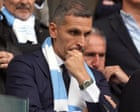
Khaldoon al-Mubarak, chairman of Manchester City, has been criticised for a confrontational approach to the charges facing the club in its dispute with European football authorities, a development reported on 8 October 2026. The criticism has focused on past threats to pursue protracted legal action and on public assurances this summer that “these sorts of jewels, you don’t sell.”
Al-Mubarak’s family background and state roles are central to his public profile: his father, Khalifa Ahmed Abdel Aziz al-Mubarak, was assassinated in Paris on 9 February 1984, and his paternal grandfather, Ahmad Bin Abdul Aziz al-Mubarak, chaired Abu Dhabi’s Sharia judicial department and served as a senior adviser to Sheikh Zayed bin Sultan al-Nahyan. Streets in Abu Dhabi bear both his father’s and grandfather’s names, and al-Mubarak went on to work for Sheikh Mohamed Bin Zayed al-Nahyan after graduating from Tufts University in Massachusetts. A Financial Times source described him as “diplomatically in charge of the UK file as well as the China file … and he’s the main liaison with the US administration” and said he has diplomatic immunity in the UK.
Manchester City’s legal posture has been linked directly to al-Mubarak by the club’s lawyer, Simon Cliff, who said al-Mubarak dictated the aggressive stance City adopted toward football authorities. Cliff cited leaked documents first published by Der Spiegel showing that “Khaldoon says he would rather spend £30m on the 50 best lawyers in the world and sue them [Uefa] for the next ten years than agree a financial penalty.” That 2014 episode ended with City and Paris Saint-Germain backing down and accepting a modest fine and transfer restrictions from Uefa.
The Guardian report contrasts City’s continued resistance with Paris Saint-Germain’s post-punishment reconciliation with European bodies; PSG’s president, Nasser al-Khelaifi, went on to become chair of the European Club Association (now European Football Clubs) and a leading opponent of the breakaway Super League. The article notes PSG subsequently built a highly successful team and that the Qatari ownership’s approach brought admiration for the Qatari brand “among observers willing to ignore human rights abuses.”
Commentators quoted in the report say the dispute has created embarrassment for Abu Dhabi and raised the prospect of a sale if appeals fail. “I’m sure that’s the case with Man City,” says Christopher Davidson, author of Abu Dhabi, Oil and Beyond. Davidson added: “More than that, I’ve been told by some [in Abu Dhabi] that it will be the case. I can’t see any reason why they would stick around and try to rebuild the reputation after this. It’s embarrassing the royal family now. I can’t think of any example where things have gone wrong [for Abu Dhabi] and they’ve just kept plugging money into it. I think they’ll play out the appeal – nothing to lose with that – but once that’s done, it’s all about how to get out before the owners are declared unfit, a far worse outcome.”
Al-Mubarak’s own public lines this year have been resolute: in June he said “these sorts of jewels, you don’t sell” and that there was “only intention to keep growing this.” Davidson, however, argued the wider UK–Abu Dhabi relationship is unlikely to be upended, noting that “Some of the reporting perhaps has portrayed Abu Dhabi as a bit monolithic” and pointing to other state-linked investments such as Masdar energy, chaired by Sultan al-Jaber, and the International Holding Company (IHC), chaired by Sheikh Tahnoon bin Zayed al-Nahyan, which has holdings including the Ivy restaurants.
On trade ties, the report records that in May the UK signed a free trade agreement with Bahrain, Kuwait, Oman, Qatar, Saudi Arabia, and the UAE which it said could be worth £3.7bn a year to the UK economy. “The UAE was a major force behind getting that and it was a major accomplishment on both sides, so there’s no prospect any of this is going to be interfered with,” Davidson says. He also said of al-Mubarak’s position within Abu Dhabi’s portfolio: “He can’t possibly have known what’s going on in every part of his empire,” and added that the controversy reflected “poor advice being given to the senior Emiratis involved, a misreading of UK politics and a misreading of the Premier League and its bigger picture as a rules-based institution.”
Should City lose their appeal against an independent commission’s finding that they were guilty of multiple breaches of financial rules, the report says al-Mubarak may be instructed to organise the sale of the club. Davidson’s comment that “I think they’ll play out the appeal – nothing to lose with that – but once that’s done, it’s all about how to get out before the owners are declared unfit” frames the immediate next step as the conclusion of the appeal process and the potential decision over ownership thereafter.