Late finishes and TV deals: why Grand Slam scheduling keeps causing headaches


Sofia Kenin defeated Venus Williams in straight sets on Arthur Ashe at the US Open in New York, with the match finishing shortly after 2am local time on Monday. Williams had been awarded a wildcard and was originally slated for a Sunday night primetime slot on Arthur Ashe, but the match did not start until just after midnight.
Three of the four Grand Slam events — the Australian Open, Roland Garros and the US Open — run split day and night sessions, with the US Open typically naming two headline matches to begin around 7pm. Tournament organisers argue night sessions allow the same seat to be sold twice and command higher prices for evening packages and premium match-ups, while broadcasters pay more for primetime rights: ESPN agreed a $2.04bn (£1.5bn) deal in 2024 to show every match at the US Open until 2037, equating to $170m (£126m) per year. Tournament director Stacey Allaster said in 2023: "Without question late-night matches were heavily discussed and reviewed after the 2022 US Open" and added "We looked at starting the evening session earlier, instead of 7pm start at 6pm, but it's not really a possibility because it's hard for New Yorkers to get here even at 7pm. We talked about [changing to] one match at night, but we felt that's not fair to our fans. One of the realities we have in tennis is that we are not defined by a start and an end time. We can have a short match or we can have a five-hour match."
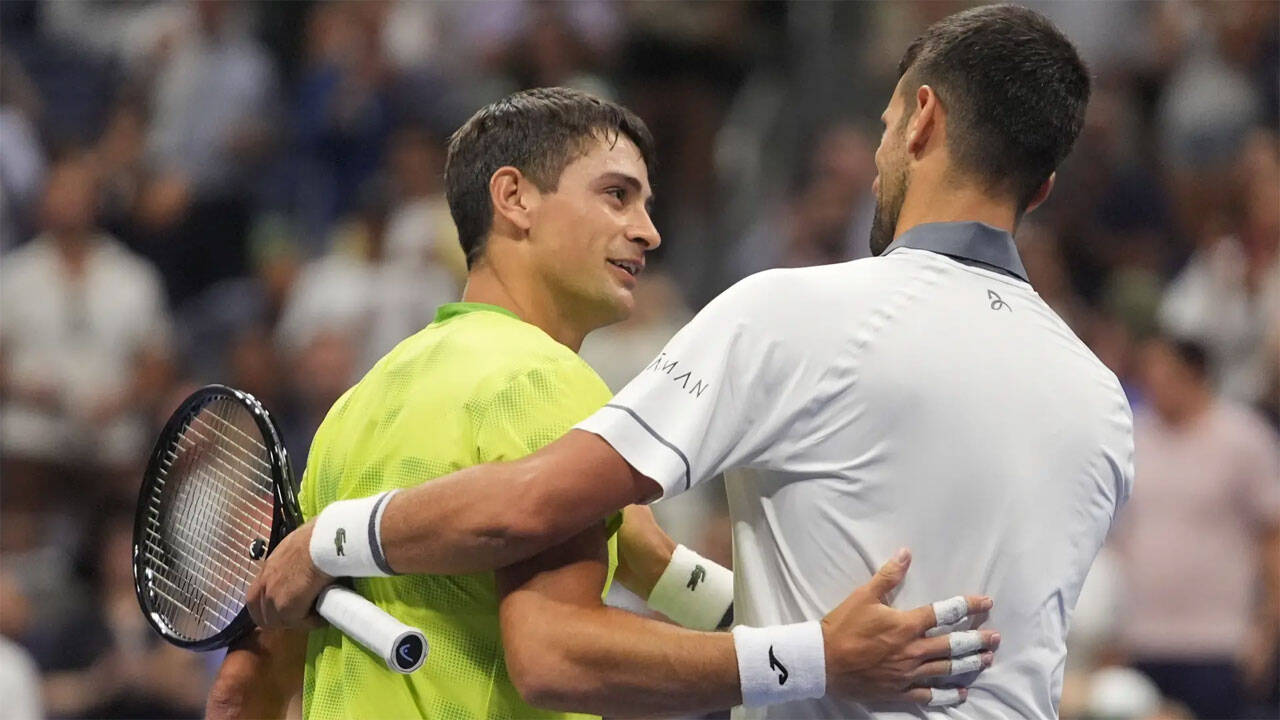
Unpredictable match lengths are the immediate cause of late finishes: long five-set encounters and extended women's matches can push subsequent fixtures deep into the night. Novak Djokovic's loss to Mariano Navone required five sets and more than four hours, a sequence that delayed the Kenin–Williams match and contributed to a sparse crowd in the 23,933-capacity stadium by the time it concluded. Organisers schedule evening sessions from 7pm, but when an earlier match overruns, whoever plays second can finish in the small hours.
Players and coaches point to tangible performance and recovery problems from late finishes and long waits before matches. Venus Williams described the timing as "not ideal" and said it "wasn't great" for her or Kenin in terms of conditioning; the 46-year-old lost her 15th singles match in a row and is also set to play doubles at the tournament alongside sister Serena. American world number 10 Taylor Fritz has said there is "no chance" he can sleep until 5am or 6am after finishing a match at 2am, and Coco Gauff commented in 2024: "A lot of times people think you're done [after finishing a match at] 3am, but then you have press, and then you have to shower, eat and a lot of times people do treatments. You're probably not going to bed until 5am at the earliest, maybe 6am, and even 7am. I definitely think it's not healthy. It may not be fair for those who have to play late because it does ruin your schedule."
Wimbledon operates under a different approach: play at SW19 starts at 11am and finishes at 11pm even if a match is not completed, with players returning the next day to finish suspended matches. That clarity can frustrate players when matches are stopped, but it guarantees an end time for spectators and aligns with the BBC's broadcast model, where reliance on advertising revenue is not the same as for broadcasters who sell primetime slots.
Scheduling complaints are part of a broader dispute between players and Grand Slam organisers over revenue distribution and conditions, with players citing late starts, limited recovery, increased media duties and pension contributions. In recent protests, players including Coco Gauff, Aryna Sabalenka and Jannik Sinner restricted their media obligations; Wimbledon and the US Open increased prize money in 2026 and a Grand Slam players advisory council will be created to give players greater input on how the majors are run. Whether that council will press to end late finishes is unclear, and organisers warn changes could affect broadcaster payments and the overall revenue pool.
The Grand Slam players advisory council is scheduled to launch after the US Open concludes and will aim to give players a greater say in how the majors operate, but the dispute between commercial imperatives and players' concerns over scheduling remains unresolved.