Liberals favour Messi while authoritarians lean to Ronaldo, studies find after Trump’s UFC post

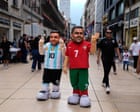
Over the weekend on Truth Social, President Trump suggested UFC chief executive Dana White should be his White House press secretary and proposed six of White’s fighters join him "to defend us against the Lunatic Left", and by Sunday Trump had backtracked; the episode and the UFC’s closer ties with Trump have prompted researchers to ask whether political views shape the sports people follow.
Sport has long intersected with politics — examples cited include Joe Louis’s 1938 fight with Max Schmeling, apartheid South Africa and the recent invasion of Ukraine — and has traditionally been seen as a unifier across social divides, but researchers now report evidence that hyper-partisanship may be changing those patterns and even influencing whether people prefer Lionel Messi or Cristiano Ronaldo.
A team of academics in Singapore surveyed more than 10,000 people across 26 countries about their Messi–Ronaldo preference and found that age, gender, education, social class and interest in politics did not significantly predict choice, while those "who were more liberal than the national mean were significantly more likely to prefer Messi."
The same study tested respondents’ views on authoritarianism by asking how much they agreed that having a "strong leader who does not have to bother with parliament and elections" was a good or bad way to govern; those with higher approval for that statement showed a preference for Ronaldo. The researchers also noted that respondents who consumed higher levels of short-form video news were significantly more likely to prefer Ronaldo, and the survey was conducted months before Ronaldo visited the White House last year, so that visit was not a factor.
The Singapore research reported national patterns: the most pro‑Ronaldo countries were Indonesia, Turkey, Mexico, Egypt and then Portugal, Singapore and China, while Messi had greatest support in South Korea and Argentina, followed by Finland, Spain and the UK.
In the United States, sociologist Joshua Woods combined Google Trends data with county-level Trump vote shares from the 2020 election to study interest in 53 sports and found that traditional sports such as American football, baseball and basketball, along with rodeo and cheerleading, were more popular in areas that supported Trump, whereas figure skating, surfing, ultimate Frisbee, soccer and tennis were more popular in liberal areas. “To me, the most interesting finding in our study was the strong negative correlation between Trump vote shares and interest in soccer,” Woods told me. “In other words, areas with greater interest in soccer were substantially less likely to vote for Trump.”
A separate study in Belgium based on 650 respondents found no clear evidence that participation levels across different sports varied according to respondents’ position on the political spectrum. “We know from the literature that right‑leaning individuals often choose well‑established brands, whereas left-leaning individuals are more likely to choose very niche or smaller brands,” one of the authors, Jelle Muraille, told me. “So we thought it would be the same with sports. But it didn’t seem that was the case.” Muraille said he is expanding his research and suggested it would be intriguing to see studies focused on Britain.
An anecdote cited by the writer described a carpenter who does not use social media being surprised to be served an advert for the Reform party while watching a boxing fight on YouTube; the man asked, "Is boxing a right-wing sport now?" The author said that question would previously have been dismissed but is now something they are intrigued to investigate further.
If readers wish to respond, submissions of up to 300 words can be sent by email to be considered for publication in the letters section.