LIV Golf headed for liquidation as withdrawal of Saudi funding exposes money at sport’s core

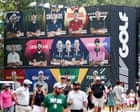
LIV Golf is due to face bankruptcy court and the start of liquidation proceedings in January 2027 after Saudi Arabia abruptly pulled the funding that propelled the breakaway tour, a collapse that has refocused attention on money’s central role in professional golf.
Greg Norman, the tour’s original figurehead, said “we’ve all made mistakes, you learn from those mistakes, and you move forward,” as LIV — a project launched amid human rights concerns — reached a terminus that the article says was ordered by the Saudi government. The last seven months after the withdrawal of Saudi support saw chief executive Scott O’Neil travelling through midtown Manhattan seeking fresh finance, producing speculative revenue forecasts and ultimately unveiling a revised plan at a press conference at the Trump National course in New Jersey.
That revised plan, dubbed LIV 2.0, proposed that players become equity partners who would forgo guaranteed purses in return for “an idea, a stake in the future enterprise,” but most players, the piece reports, opted to walk away and plot a route back to more liquid golfing tours. Upon signing lavish contracts, many of those players had publicly praised LIV’s stated values and its purported commitment to the holistic growth of the game; when faced with the practical realities of the revamped model, the majority chose to leave.
The article argues that LIV’s operation was driven primarily by financial firepower rather than transformative innovation, saying the project fulfilled “no urgent need beyond the inelastic impatience of Yasir al-Rumayyan.” It records the blunt assessment that “Spending Lots Of Money To Buy The World’s Best Golfers is not a hard or clever thing to do,” adding a caveat about how geopolitical shocks—“at least until the blockade of the Strait of Hormuz sends your oil revenues spinning deep into the second cut”—can alter that calculation.
On the game’s culture, the piece lists customary practices as markers of golf’s exclusionary tendencies — “No phones at Augusta. Respect for the putting line. Calling a penalty on yourself. Drinks in the clubhouse. Collared shirts and tailored legwear. Your approval for membership must be proposed and seconded by existing club members” — and frames those customs as continual tests of whether someone is “our kind of person.” The writer asserts there has been little equivalent of overt activism in golf, noting Rory McIlroy was “utterly baffled at the idea that anyone might deem [playing with Donald Trump] a political act,” and portraying an environment where politics is typically treated as settled.
Faced with LIV’s challenge, the article says the PGA Tour, under former NFL executive Brian Rolapp, responded by embracing private equity, larger prize funds and new commercial structures: a top-tier Champions Series, “Signature events” with smaller fields and no cuts, and a player equity programme tied in part to fan engagement and media visibility. That reaction is characterised in the piece as a direct monetary counter to LIV’s disruption and as an extension of Trumponomics: “for those best able to leverage it, attention equals currency, power, money.”
“LIV may have lost the war. But it may just have won the argument.” Do you have an opinion on the issues raised in this article? If you would like to submit a response of up to 300 words by email to be considered for publication in our letters section, please click here.