Mohamed Salah’s rise from Nagrig to Al Mokawloon in Melissa Reddy book extract

Mohamed Salah’s sacrifices and ascent from Nagrig to professional football are described in an exclusive book extract by Melissa Reddy, published on 5 August 2026, which recounts his time training at Al Mokawloon’s youth sector in Nasr City, Cairo. The piece details long commutes, improvised overnight stays and the coaches and family who supported him.
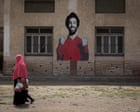
The extract opens by describing the entrance to Al Mokawloon’s youth sector—its concrete facade, marble-like trim and black steel gate—and notes that Salah’s image hangs above the gates as a reminder of the path he followed from the age of 14. Hamdi Nouh, Salah’s first coach at Al Mokawloon and whom Salah has called a “second father”, said “he was ready to sacrifice everything, he wanted to work hard, and liked to learn”. Reddy records that Salah endured a nine-hour round trip five days a week to train in Cairo.
Reddy sets out the route Salah took as a boy, saying it became so well known it was told in many languages: a minimum of four buses each way, from the T-junction at the edge of his village to Basyoun, then to Tanta, then roughly 100 kilometres to Ramses Square, followed by a connection into Nasr City and, on luckier days, a final ride close to the club’s gates that could spare him a nearly two-kilometre run up a steep hill. After around four hours at the centre, he would reverse that journey.
The extract emphasises the daily conditions: Salah travelled packed “shoulder slammed into shoulder, bodies filling up every available inch of the microbus and often even hanging off it,” with only exact change for the route and no margin for error. His mother, Umm Mohamed, feared the trips and recalled one major accident that prompted her to call his phone more than 20 times; Salah did not answer because he had fallen asleep. Reddy records his father’s name as Salah Ghaly, and says he worked as a government administrator and traded in jasmine while funding Salah’s early moves from Ittihad in Basyoun to Othmason in Tanta and then to Al Mokawloon.
Reddy recounts episodes that show how precarious Salah’s youth could be: after a planned sleepover at a teammate’s uncle’s house failed because the relative was not home, Salah and his friend were left with insufficient money and ended up at a house in a cemetery before an administrator at Al Mokawloon let them in. They slept overnight behind the steel gates, then shifted to sleeping on Field 2 under the open sky, with Salah using his shoes as a pillow and setting an alarm for 6am so they could be up before the administrator arrived and return to training at 9am.
Salah’s progression through the club culminated in moving into Al Mokawloon’s residences when he joined the first team group, an experience he recalled as transformative: “Not everyone could stay there, so psychologically I felt like I became someone, like a star,” he said, adding that he used to watch players go upstairs and tell himself, “One day I’ll go up there”. Reddy concludes by stating that Salah “would go higher than any other Egyptian footballer in history.”