Natalie Nakase’s Golden State Valkyries beat Atlanta 68-63 in Game 7 to win first WNBA title

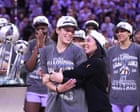
Natalie Nakase’s Golden State Valkyries defeated the Atlanta Dream 68-63 in Game 7 of the WNBA Finals at the Chase Center on Saturday 31 Oct to claim the franchise’s first WNBA championship. Nakase, the team’s head coach, addressed the crowd at the trophy ceremony and told her players: “We have unconditional love that’s fucking unbreakable, guys.”
The title arrived in only the Valkyries’ second season amid a roster constructed largely from overlooked players and driven by a coaching staff intent on building trust and opportunity. Golden State entered the year as 45-1 preseason longshots and, by beating Atlanta in a best-of-seven series, became the fastest expansion team in major North American professional sports history to win a championship. The organisation emphasised investment, responsibility and trust as the foundation for rapid success.
The finals swung to Golden State with a nerve-tightening 68-63 victory in Game 7 after a seven-game series that unfolded as follows: Sat 17 Oct Game 1: Golden State 68, Atlanta 64; Mon 19 Oct Game 2: Atlanta 79, Golden State 65; Wed 21 Oct Game 3: Atlanta 97, Golden State 71; Sat 24 Oct Game 4: Golden State 67, Atlanta 62; Mon 26 Oct Game 5: Golden State 64, Atlanta 55; Thu 29 Oct Game 6: Atlanta 80, Golden State 69; Sat 31 Oct Game 7: Golden State 68, Atlanta 63.
Several players on the Valkyries’ roster arrived via unconventional paths. Veronica Burton had been waived by the Dallas Wings, returned to train at the West Suburban YMCA and, after a stint with Connecticut and being left unprotected in the expansion draft, developed into the league’s most improved player with Golden State. Kaila Charles had been cut five times and accepted a seven-day hardship contract that led to a starting role in the finals; Kayla Thornton, undrafted and released by two teams, became a first-time All-Star at 32; Cecilia Zandalasini had started only six WNBA games before joining the Valkyries and started 44 games across the franchise’s first two seasons; third-round pick Kaitlyn Chen settled into a backup role behind Burton; and Tiffany Hayes, a former sixth woman of the year, ended a career-long title drought on Saturday.
Gabby Williams provided the tournament’s standout scoring display in Game 7, finishing with 30 points and pouring in 28 of them after half-time — which the club noted was the highest-scoring half in WNBA playoff history — and was named finals MVP. Williams reflected on the group’s character: “All it took was good people,” Williams said. “All we heard last year was we don’t have no stars. We don’t have no talent. Yeah, right! We got good people. We got good people. We got winners. We got people who are ready to put their bodies on the floor to win a game.”
Nakase’s own playing and coaching journey underpinned her approach to assembling the Valkyries. A 5ft 2in point guard from a Japanese-American family who walked on at UCLA after turning down a UC Irvine scholarship, she overcame a torn ACL to earn a scholarship, started and captained the Bruins for three seasons but never made a WNBA roster. Phoenix cut her in 2007 and a subsequent knee injury in Germany ended her playing career; she went on to coach the Wolfenbüttel Wildcats, moved to Japan where a scouting report earned a volunteer assistant role under Bob Hill, became the first woman to lead a team in Japan’s top professional men’s league with the Saitama Broncos, returned to California for an internship in the Los Angeles Clippers’ video department and spent a decade in that organisation before Becky Hammon brought her to Las Vegas in 2022, where she won two championships as a bench coach.
Nakase’s intensity has had practical consequences during the Valkyries’ run: she nearly fainted in the closing minute of the first-round decider against Dallas and later gave herself a full day off during the semi-finals. She attributed much of her drive and commitment to her late father: “He’s the reason why I’m built the way I am. I am crazy. I am obsessive. I am a workaholic,” she said. “But it’s more just pouring into people, believing in people, helping people, that’s all come from my dad.”
Ownership and front-office choices were also central to Golden State’s model. Joe Lacob told reporters that he set a five-year championship requirement when interviewing for the head coach role and praised his executives at the trophy ceremony: “Those three women made this happen,” he said. Nakase acknowledged the owner’s role in setting expectations: “I’m impatient,” Nakase said after delivering it in two. “I’m obsessive but it’s because he pushes me.” The franchise’s commercial progress was cited alongside competitive success: Sportico reported the Valkyries had become the first women’s professional sports team to exceed $100m in annual revenue, and ticketing analyst Keith Smith noted the cheapest available Game 7 ticket was $364 roughly 24 hours before tipoff.
The result was a championship in 534 days after the franchise’s first game, built around a roster assembled from spare parts, an owner prepared to fund infrastructure and a coach who prioritised trust and opportunity.