NFL quarterbacks under record pressure as Ravens prepare to start Jacoby Brissett vs Chargers

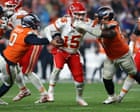
The Baltimore Ravens are preparing to start their fourth quarterback this year, Jacoby Brissett, against the Los Angeles Chargers on Monday, as NFL quarterbacks are experiencing unusually high levels of pressure this season. Through nine weeks, quarterbacks have been hit on 15.1% of their dropbacks, the highest rate since hits were first logged in box scores in 2006.
Jackson, Tyler Huntley and Joe Fagnano sustained injuries after taking hits in games, leaving Baltimore close to the NFL single-season record of five different starters — a mark shared by the 1984 Bears and the 2023 Browns when the 1987 strike season is excluded. Forty-seven different quarterbacks have started through nine weeks in 2026, a total behind only 2019 (48), 2010 (48) and 2007 (49) over the past 20 years; expected starts for Carson Beck, Kyle McCord and Fernando Mendoza will raise that figure further.
Multiple tracking services show pressure at or near record levels: Pro Football Focus records a 36.1% pressure rate, its highest since 2006; Sports Info Solutions places 2026 as the second-highest in its dataset back to 2016, behind 2025; and Next Gen Stats records 2026 as the third-highest since 2018, just 0.1% below 2023. Those measures collectively indicate defenses are generating more pressure than in recent years.
Arguments that a decline in offensive-line play is driving the rise in pressure are tempered by evaluations of top tackles and guards — including Trent Williams, Penei Sewell, Creed Humphrey, Quenton Nelson, Tristan Wirfs and Jordan Mailata — and by pass-block win-rate metrics, which have not materially fallen. The lowest PFF grades for offensive linemen are higher now than historically, and while underperformers this year like Austin Jackson and Cam Jurgens are visible, they are not comparable to the mediocrity cited from prior seasons such as John Michael Schmitz Jr in 2023 or Scott Quessenberry and Kenyon Green in 2022.
Blitzing has increased somewhat — with some teams, notably the Minnesota Vikings, blitzing at very high rates and the median team’s blitz rate above recent norms — but median blitz rates were higher in 2009, 2010, 2011, 2013, 2014, 2019 and 2020. Pressure on blitzes this year sits at 42.7%, which is somewhat elevated, yet pressure has also risen on unblitzed downs. At the same time, pass-rush win rates have not increased and are lower than ever, and quick-pressure rates (pressure under 2.5 seconds) remain consistent with historical levels.
The clearest change is time in the pocket: average time to throw is 2.83 seconds, the longest on record in these charts, while clean-pocket time to throw is 2.45 seconds, up from a 2.38 average over the previous 10 years. Dropbacks lasting 2.5 seconds or longer now make up 57.6% of attempts, and those longer dropbacks have historically been pressured at a 50.5% rate compared with 16.6% for quicker snaps. Scrambling quarterbacks such as Caleb Williams lead the league in time to throw, about 45% of dropbacks now fit the scrambler profile versus 10% in 2009, and throws on the run have risen to 12.5% of all throws from 7% in 2022; time-to-throw for non-scramblers also sits at a dataset-high 2.81 seconds.
At the same time, offensive concepts and coverage tweaks have altered deep-pass opportunities: dropback depth has increased after a late-2010s dip, yet average depth of target has fallen and the most recent five-year stretch is the shallowest in the throw-depth data. Teams are using two-high safety shells (Cover 2 and Cover 4) more than at any point in the past 20 years, and play-level data show throws over 20 yards occur at 9.1% against Cover 4 and 10.3% against Cover 2, compared with 10.7% against Cover 0, 11.5% against Cover 3 and 14.8% against Cover 1. Quarterbacks are declining their first read at the lowest rate in six years (per FTN Fantasy and the PFF QB annual), tight-window throws are at their highest since 2020 (per Next Gen Stats), and contested targets account for 52.4% of targets this year (PFF data), with only 2024 above 50% at 50.1%.
The rise in pressure appears to result partly from quarterbacks extending plays and a modest increase in blitzing, and from natural variance, but the dominant factor is teams limiting deep passing attempts and improving coverage on those attempts; the Ravens’ decision to start Jacoby Brissett against the Los Angeles Chargers on Monday provides an immediate example of quarterbacks and offenses operating in that environment.