Nouria Newman completes second full descent of Klinaklini after flows double overnight

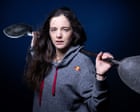
Just hours before Nouria Newman planned to put in on the Klinaklini River in north-western British Columbia she checked the water gauge, saw flows double overnight after rain and watched the Class V lower gorge become a death trap; after waiting for levels to fall she and her paddling partner Sandy MacEwan launched and completed the second full descent of the river’s full 125 miles to the Pacific.
The 35-year-old French kayaker shifted from a competition-focused early career to remote rivers and waterfall drops, drawing on success in slalom and freestyle to build a reputation in extreme kayaking. She won the Ottawa XL in 2013, finished second at the ICF Canoe Slalom World Championships the same year, took 2014 world championship gold in the team event and has been named an extreme kayaking world champion five times. Newman became the first woman to run Site Zed on the Stikine, later set the record for the largest waterfall drop by a woman at 104ft and was the first woman to run Pakistan’s Rondu Gorge in 2023; over the last decade she has paddled in dozens of countries, including solo expeditions in India and Madagascar and first descents in Colombia and China.
The Klinaklini had defeated two of three previous attempts to paddle the full 125 miles, leaving only one successful group before Newman’s expedition. She and MacEwan waited for flows to recede, then launched; by the 12-mile crux the river had returned to its normal volume, around 10,000 cubic feet per second, and after carefully scouting the six canyons that make up the lower gorge they completed the second full descent. "Rivers like this are exciting, scary and unknown," Newman said. "Whitewater is ephemeral, that’s why we keep chasing it. A lot of people see happiness as a whole – family, job, house, money – but I see whitewater as these super, super happy moments, and then I move on to the next thing."
Newman’s paddling roots began in Le Villaret du Nial in the French Alps; she took her first kayaking class at five and paddled her first wild river, the Chéran, at six, an outing that left her scared, cold and then happy after a picnic. She won her first race at eight, was recruited to the national federation training centre at 15 but chose to stay with her club, and paddled before and after classes throughout high school. After moving to Toulouse to study at Sciences Po she earned one of three places on the French slalom team while juggling university and training; "Everyone was fighting for the spot," she said, and tensions with the federation grew amid disagreements about study choices and priorities. "I was raised in a way where I didn’t assume all adults are right," Newman added.
At the end of 2017, following shoulder surgery and two seasons of mixed results, Newman was removed from the federation team and undertook a solo expedition to the Tsarap, Zanskar and Indus Rivers in India. During that trip her boat was pinned on a rock above a siphon; after four minutes trying to free the boat she pulled her skirt, attempted to climb the rocks, was sucked into the siphon and fortunately flushed through safely, then paddled for five more days to reach the river’s end. She uses such episodes to frame how she thinks about danger: "In the prep, risk is rational, it’s a calculation. On the river it has to be more intuitive," she said. "If you do this long enough, you see the contradiction. You want to bring the risk lower, but you’re willing to test it. It’s like having little demons that try to push it too far. We’re humans, so we will make mistakes at some point."
Newman has experienced other serious incidents, including being pushed into a recirculating water trap on the Clearwater River in Canada; "I was arrogant and not respecting the river, and got beat down," she said. She admits explaining those decisions to her parents is difficult, and that she previously lied to her mother about waterfalls but no longer does so: "They now know more than they sometimes want to, even if they don’t always understand why I do it." Her academic credentials include a 2018 master’s degree in journalism and political science with a focus on sociology and a thesis on social constructs and fear — specifically how women are conditioned from a young age to be more fearful than men.
Though she works as a writer, expedition planner and entrepreneur, Newman prefers to be defined by kayaking and is wary of labels such as adventurer or influencer. "Everyone these days calls themselves an adventurer or influencer or explorer. I don’t know what that means any more," she said. On balancing public exposure with paddling she added: "I would buy a plane ticket for tomorrow to try a new river. My business model is to put kayaking first, and then everything else. I don’t want YouTube or Instagram to take too much time. I could make more if I followed the algorithm, but that would take away from me kayaking. Other people might get an agent or a sunscreen ad or be on a billboard, but I don’t care about that. I do it my way."
Newman’s immediate outlook remains focused on rivers and the people she paddles with; she says whitewater pulls her toward a river but that what endures are the companions and moments shared, and she retains the willingness to travel at short notice to try new descents. "My why is always changing. Whitewater pulls you toward a river, but what you remember is the people you were with, not the whitewater," she said.