Plazma Youth Sport Games mark 30th anniversary in Split

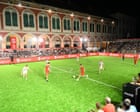
The Plazma Youth Sport Games celebrated its 30th anniversary in Split this month, bringing celebrity ambassadors from Sean Dyche to Alastair Campbell and staging finals in 10 sports.
Just under half a million young people from across Croatia, Bosnia and Herzegovina, Serbia, Slovenia and North Macedonia took part in qualifying for this year’s event.
Founded by Zdravko Maric in the aftermath of the breakup of Yugoslavia and the Bosnian war, the Games began as an effort to counter drug problems among Croatia’s young people. "It’s a lifetime project and we live with it every day," says Slaven Maric, Zdravko’s brother. "But when Zladko started it we didn’t have an idea that it would develop into this. It’s not about sport or the results, its about social life, it’s about being together. There were many issues with drug abuse [then], now it’s about bringing the kids to spend sometime together in real life." The organisers describe Plazma as both a sporting event and a "social project", and say attempts by esports brands to become involved have been rebuffed.
On a dais overlooking the Adriatic, 20 children played chess against grandmaster Nigel Short, with Short passing around the group and playing one move each time. The competitors were among the best young chess players from the Balkans and received coaching from a range of visiting figures, including former French Open champion Ana Ivanovic, former Burnley manager Sean Dyche and the rightwing tech billionaire Peter Thiel.
Dyche offered strong praise for the event and singled out a youth match as a highlight, calling the Games "a brilliant, brilliant initiative". Of the girls’ mini-football final he said: "It was terrific, they were playing good football; getting properly stuck into each other, properly playing. You could feel that they felt free and were being supported in that environment." He also expressed scepticism about whether a similar initiative could take root in England: "It seems to me that every time you try and get an initiative off in England, there’s a million rules and regulations that make it difficult," he said. "I know how hard it can be to get funding too and times are tough for people."
The connection between the Games and the host city is prominent: Split, with a contemporary population of only 160,000 people, has produced athletes such as Goran Ivanisevic and Bernard Vukas and honours 73 medal winners on an Olympic "walk of fame". Champions from a range of sports — Branko Cikatic, Toni Kukoc and Stipe Bozic among them — are part of the city’s sporting history, and Split even has its own traditional game, picigin, played in the shallows of the Adriatic. "I’m not objective because I’ve known Zdravko for more than 30 years but it’s great that at a time when there’s a lot of negativity in the world that this can exist," said Slaven Bilic. "Especially in this part of the world that is supposed to be unstable."
High-profile backers and sponsors are increasingly visible around the event: ambassadors have included Zlatan Ibrahimovic and Alastair Campbell, while corporate partners listed by organisers include Coca-Cola, Topps and the Croatian telecom firm Telemach. The organisers say there are now 11 billionaires associated with the games, a number of whom have invested money in its success. One of those investors is understood to be Thiel, the founder of PayPal and Palantir and a mentor to JD Vance, the US vice-president. When asked by the Guardian why he had chosen to take a stake in the games, Thiel did not respond and passed down the riviera with his security detail. Aleksander Ceferin, the president of Uefa, whose organisation also provides funding to the YSG, said: "I think that top sport, and the money that you get with top competition, should be used for the development of sport and this is the development of sport."
The Games ended on Friday night with their own version of Soccer Aid, a match between a YSG team and 11 all-stars that included Claude Makélélé, Pavel Nedved and Ibrahimovic, while local players were coached by Dyche.
The question of where the Games go next is clearly looming large for organisers and associated parties alike; discussions have taken place with six other countries about joining in the future.