Pocognoli given time to experiment as questions linger over Scottish FA

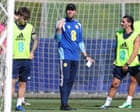
Sébastien Pocognoli has taken charge of Scotland’s national team ahead of their Nations League opener in Slovenia on Saturday. The 39-year-old arrives with scope to experiment, having named a number of untried and younger players for his opening fixtures.
Host status for Euro 2028 means Scotland face little risk of missing that tournament, and the Nations League window in Slovenia gives Pocognoli room to try new options without immediate consequence. He succeeds a period in which parts of the public grew weary of Steve Clarke and demanded change; the article notes supporters are unlikely to turn on Pocognoli even if the start is bumpy. The Scottish FA’s recruitment underlines their ambition: Pocognoli’s salary is understood to be seven figures at base level.
Pocognoli has called up a cohort of unfamiliar faces in this first squad and will mix those players with Clarke’s established performers, who remain important. The piece stresses that not all of the young players will necessarily be ready for international football and that improving talent identification — including finding more players eligible through family bloodlines — is a priority for Scotland.
At club level Pocognoli was central to Union Saint-Gilloise’s title win in 2025, the club’s first league triumph in nine decades, and his methods were part of a wider system that included Tony Bloom and the analytics tool Jamestown. His subsequent spell at Monaco lasted 38 games and took the team into the Champions League knockout phase; his work developing young players at both clubs has drawn praise.
Craig Mulholland has been appointed the Scottish FA’s chief football officer after roles at Rangers and Nottingham Forest and has accompanied Pocognoli since the coach’s August appointment. Mulholland has promoted the use of data, employed a sports intelligence agency to assist the manager search and to present to clubs, and said: “people doing an international job for the first time are more successful than those doing it for the second time.” The article describes Mulholland’s credentials as questionable and adds, “Mulholland talks the talk. The rest remains to be seen.”
Pocognoli’s working pattern appears to favour a 3-4-3 formation and he summarised his principles: “The basic principle is to attack together and squeeze the pitch. When we need to defend, we have to defend like brothers. When we lose the ball, we try to regain it as soon as possible. That for me is the base.” He has overseen an intense camp in La Manga that players have enjoyed, but Scotland are without Scott McTominay for this Nations League window as the midfielder recovers from a heart procedure and the team remain described as weak in the goalkeeping and centre-back departments, with much stock being placed on Oli McBurnie taking an international second chance.
The article recalls recent governance and managerial controversies: Clarke embarrassed the Scottish FA during a dinner appearance in Edinburgh when comments about strong-arming his employers into a four-year contract before the World Cup were made public. Ian Maxwell, the Scottish FA’s chief executive, said at Pocognoli’s unveiling: “I think in a lot of aspects, Scottish football needs to modernise itself. We need to think differently about how we do things across a range of areas”. Maxwell has been in office since 2018 and is noted for having previously dismissed critics of Clarke’s contract extension. The Scottish FA belatedly withdrew public support for Gianni Infantino continuing as Fifa president, Mike Mulraney has remained silent, and the piece states bluntly that “Pocognoli has been hired by unconvincing people.” It also recalls Scotland’s last trip to Ljubljana in 2017 ended with failure to reach the following year’s World Cup and Gordon Strachan using genetic limitations as an excuse, while seven years under Clarke saw Scotland become a more relevant international force.
Scotland begin their Nations League campaign in Slovenia on Saturday, when Pocognoli’s selections and the Scottish FA’s recent organisational decisions will be tested on the field.