Racing Post to end print greyhound coverage, industry hit by fresh setback

Britain’s greyhound racing industry woke up on Monday to news that the Racing Post will drop both editorial coverage and greyhound racecards from its print edition from 10 December. Five members of staff are expected to lose their jobs and the paper will retain a greyhound section on its website.
The Racing Post, which has carried extensive coverage of the sport since its launch in 1986, said the decision was an "immensely difficult decision" and blamed "tax rises that have hit betting shops [which] have put pressure on the whole industry," adding that "like other businesses, we have to make hard choices about where we focus our resources," Tom Kerr, its editor, wrote in a letter to readers. Monday’s announcement prompted anger and dismay among fans and professionals; Mark Bird, the chief executive of the Greyhound Board of Great Britain (GBGB), said: "This undoubtedly will have come as a shock to those who have followed the sport for decades and relied on the paper as a trusted source of news, results and insight." He added: "It is deeply disappointing news, particularly at a time when it feels more important than ever for horse racing and greyhound racing to stand together in the face of the challenges confronting both sports."
There are currently 15 active greyhound tracks in England and Wales. Scotland has not had a GBGB-licensed track since March 2020 and also voted to outlaw the sport earlier this year; the loss of Racing Post print coverage has been described within the sport as another significant setback.
At its peak in 2004 the sport saw 12,000 new registrations of racing greyhounds and a total of 51 tracks, including 20 "independent" venues, generating around £3bn in betting turnover annually. The industry has since faced the closure of many tracks, including the London venues of Walthamstow and Wimbledon, and the Gambling Commission estimated off-course turnover at approximately £1.2bn in 2025, with around half that total coming via betting shops.
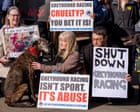
Funding contrasts with horse racing: horse racing benefits from a statutory levy and substantial media rights income, while greyhound racing has only ever had a "voluntary" levy from gambling firms that has dwindled in recent years. Since September 2023 the sport has also been the target of a campaign for phased abolition coordinated by Cut The Chase, a coalition of animal welfare charities including Blue Cross and the Royal Society for the Prevention of Cruelty to Animals (RSPCA).
The RSPCA’s involvement represented a change of approach from earlier engagement with the industry, and at Cut The Chase’s launch the RSPCA signed a joint statement declaring that greyhound racing is "inherently dangerous", and that "significant welfare issues for racing greyhounds have not been resolved and cannot be resolved." The RSPCA’s current policy with regards to horse racing is to "engage" with the industry to encourage the highest possible welfare and safety standards; after this year’s Cheltenham festival, when four horses died from 475 runners, the RSPCA issued a statement that "these incidents are clearly at odds with the UK’s status as a nation of animal lovers".
Valley Greyhounds near Ystrad Mynach, Caerphilly, currently the only greyhound track in Wales, will close by April 2030 after the Senedd voted to ban greyhound racing earlier this year.