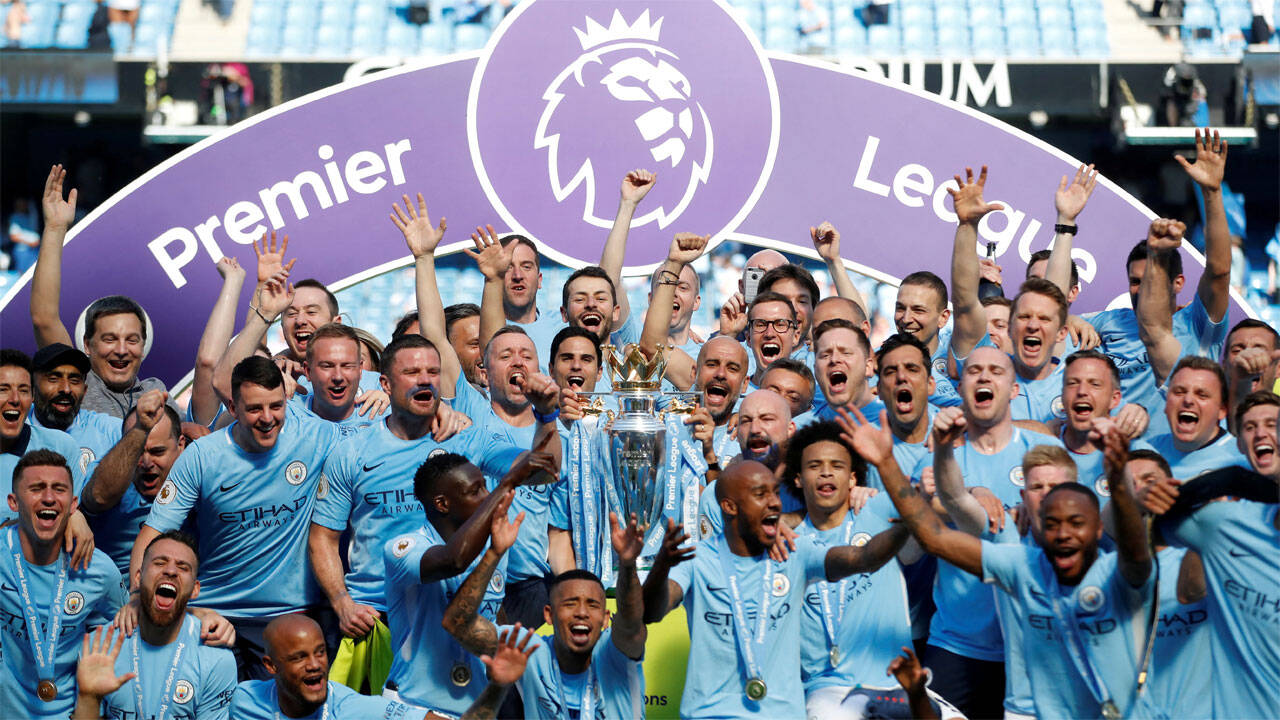
Senior figures fear Manchester City could still play in next season's Champions League despite sanctions


On 7 October 2026 senior figures in English football warned that Manchester City could still compete in next season's Champions League even if they are relegated after being found guilty of financial breaches. BBC Sport has been told there is no automatic mechanism to remove a club from a European competition it qualifies for on sporting merit.
Manchester City won the Champions League in 2023 with a 1-0 win over Inter Milan. An independent commission found City guilty of inflating sponsorship revenue by £830m using sham contracts and of hiding other expenses worth an additional £90m, and concluded that without this manipulation the club would have failed the profit and sustainability rules in all nine seasons between 2009-10 and 2017-18. City continue to strenuously deny any wrongdoing, calling the outcome a "Premier League conspiracy". Last week the club lodged an appeal against the verdict.
Concern centres on the scenario in which City win the Champions League, because that would provide qualification for the competition as titleholders regardless of their status in the English domestic pyramid. BBC Sport has been told there is currently no automatic mechanism to prevent a club from taking up a place in Europe if it has qualified on the field, prompting senior figures to warn about the optics of a sanctioned club playing on the continent.
The immediate technical issue relates to the Uefa licence required for European competition; licences are issued by the Football Association, although the process is delegated to the Premier League. Sources said the issue of City's licence "had been raised" and that a solution "would require the sort of joined up thinking that's been a bit lacking so far".
Those licences are based on current information and do not take into account sanctions or breaches related to historical offences, and if a club fulfils all minimum criteria required for admission the licence cannot be refused. The key grounds for failing to receive a licence relate to overdue payables to other teams, players or outstanding tax liabilities; match‑fixing convictions within the last 10 years, or an integrity conflict related to multi‑club ownership, are considered but would not apply to City. One source said "licences are awarded on the basis of current financial performance, so the grounds to refuse one are unclear".
If the independent commission's verdict is upheld on appeal, City are likely to face severe sanctions which could include heavy points deductions, a large fine and transfer embargos, although the sanctioning hearing to determine the level of punishment is yet to be scheduled. A points deduction could prevent qualification for Europe via the league, while the club might still qualify through cup competitions; expelling City from the Premier League immediately is also an option that has been mentioned.
Senior figures in the English game and in European football are also concerned that the disciplinary and appeals process may not be completed by the end of the season. The Premier League added new clauses over the summer to set timeframes around disciplinary processes and appeals which, if applicable, would require a judgment on sanction no later than January, but there is no confirmation this applies to the City case. European football's governing body cannot take action while the Premier League disciplinary process plays out, although it is understood potential scenarios are likely to be discussed by the Uefa administration and the Uefa club financial control body (CFCB).
The Premier League inquiry found City guilty of five charges of breaching Uefa's profit and sustainability rules. Uefa may open a case under its disciplinary regulations to try to remove City's eligibility for European competition, but that does not guarantee a solution because the offences are historical. In 2020 City successfully overturned a two‑year ban from European club competitions handed down by Uefa after the governing body had ruled the club committed "serious breaches" between 2012 and 2016; the Court of Arbitration for Sport overturned that ban on the basis the offences were "time‑barred". If City are not successful in their current appeal and then win the Champions League, the CFCB would have to identify a disciplinary measure to remove the club from next season's competition, and there is the concern they could mount a successful legal challenge again.
The club lodged an appeal against the independent commission's ruling last week, the sanctioning hearing has not been scheduled, and City face Brighton in the fourth round on 28 October, a tie that could affect qualification for other European competitions if the club pursue those routes.