Spain’s system smothers Argentina in New Jersey, leaving Messi’s World Cup story in shadow

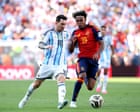
Spain secured the World Cup in New Jersey by dismantling Argentina in the final, a victory that handed Spain a second World Cup trophy. The contest ended with Argentina offering little beyond stubborn resistance while an emotional undertone surrounded Lionel Messi.
Spain’s path to the title involved defeating the other 2022 finalist before arriving at the final in New Jersey, where their tactical approach repeatedly constrained Argentina. The match unfolded under hot conditions, with Spain applying a systematic pressure that gradually drained Argentina’s energy. By the end, there was a pervasive sense of melancholy about Messi’s role in the tournament and the wider arc of his international career.
Tactically, Spain’s plan was built on collective structure rather than theatrical individual interventions. Their disciplined pressing and positional rotation denied Argentina the space to create the moments of spontaneous brilliance that have often been their escape route. As the game progressed Argentina’s play lost its earlier spark and became increasingly limited to dogged defence and fleeting moments of resistance.
Argentina was presented in this tournament as a side that has leaned heavily on faith and devotional energy anchored around a single, ageing genius. That formula can produce extraordinary results but it also carries a fragility when the central figure is unable to summon the decisive intervention. On this occasion, the intoxicating unpredictability that has rescued Argentina in the past simply did not materialise.
There was an unmistakable emotional note to the final that extended beyond tactics and possession statistics. Observers and supporters found themselves watching a 39-year-old Lionel Messi whose influence on the match felt muted compared with past tournaments. The game acquitted Spain of their superiority and left Argentina with little in the way of sustained attacking threat.
The final scene played out in what the coverage described as a clanky metal bowl outside New York, and the image of Messi in that setting carried weight. For a team assembled around a sense of collective belief and the hope of one man’s intervention, the failure of that deus ex machina was decisive. Argentina’s contribution to the contest narrowed to an almost purely combative resistance as Spain imposed its system.
Spain departed with the reward of an entirely deserved second trophy, a vindication of organisation and team planning over reliance on inspiration alone. For Argentina and Messi there remained a palpable sense of finality and a recognition that the particular brand of magic that carried them to previous heights can sometimes be absent.
The match underlined the limits of singular genius when faced with a cohesive team strategy, and it leaves a lasting image of Spain’s collective game prevailing on the biggest stage while casting a quiet, reflective shadow over Lionel Messi’s World Cup swansong.