Sports Ministry boosts event aid to Rs 50 crore and outlines Olympic Training Centres plan

The Sports Ministry on Friday, October 16 raised the maximum financial assistance available to National Sports Federations (NSFs) for hosting international tournaments in India from Rs 2 crore to up to Rs 50 crore and issued revised operational guidelines as part of a funding scheme tied to preparations for the 2030 Commonwealth Games and the government’s bid for the 2036 Olympics.
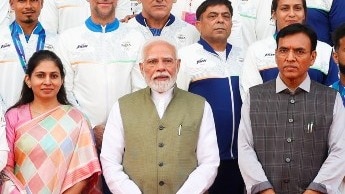
The government approved continuation of the Scheme of Assistance to National Sports Federations for 2026-27 to 2030-31 with a total outlay of Rs 7,386.74 crore, the Ministry said. The announcement followed an interaction a day earlier in New Delhi in which Prime Minister Narendra Modi reiterated India’s ambition to host the 2036 Olympics while speaking with Asian Games medallists. The revised ceiling of Rs 50 crore will not be an automatic allocation but granted based on the event’s nature and importance, the number of participating countries and athletes, and an assessment by a committee headed by the Sports Secretary.
The guidelines extend the Rs 50 crore assistance limit to the conduct of the National Games, specifying coverage for sports equipment, timing, scoring and results services, remuneration for technical officials and other technical requirements. The scheme remains the principal channel for government support to athletes preparing for major competitions, including the Olympic Games, Asian Games, Commonwealth Games, Paralympic Games and World Championships. Recognised federations can obtain funding for national coaching camps, training at academies, boarding and lodging, sports kits, insurance and sports science services.
The scheme also allows support for personnel and exposure, with funding covering foreign coaches, high-performance directors, physiotherapists, doctors and other support staff, as well as overseas training and competition exposure. One of the scheme’s central additions is the proposed establishment of Olympic Training Centres (OTCs) — specialised, sport-specific facilities equipped with modern training infrastructure, sports science equipment and expert personnel. Elite athletes based at OTCs will be eligible for assistance for coaches and technical staff, sports science services, specialised equipment and technical assistance.
The policy requires National Sports Federations to allocate at least 20 per cent of their annual assistance budget to grassroots development through affiliated units and mandates annual national championships for men and women across senior, junior and sub-junior categories subject to prescribed eligibility and participation norms. At least 10 per cent of funding must be directed to coach and technical-staff development, and federations with annual budgets of Rs 10 crore or more are required to appoint a High Performance Director. The guidelines cap foreign coaches’ remuneration at 30 per cent of a federation’s overall approved budget and oblige federations to groom at least five Indian coaches alongside foreign experts.
The revised framework reclassifies sports into High Priority, Priority and General categories — replacing the earlier 'Others' label — with differing assistance limits for national championships. It also provides mechanisms to expand the international footprint of indigenous disciplines, allowing federations to seek support to have traditional sports included as demonstration events at global competitions, to establish national federations in other countries and to back international or continental bodies operating from India. The scheme includes provisions for using India’s high-performance facilities to enhance cooperation with countries in the Global South and offers scholarships and subsidised access to training facilities for athletes and coaches from partner countries, along with financial support for events, conferences, workshops and research involving BRICS and BIMSTEC.
The guidelines set out planning and accountability measures requiring federations to submit detailed plans aligned with a four-year Olympic cycle, broken down into annual estimates, and envisage centralised digital systems to track data and performance. While the higher funding ceiling could help India attract more international competitions and improve preparation for major events, the Ministry noted the ultimate impact will depend on how federations use the assistance, the quality of their proposals and the implementation of the new provisions. The five-year funding cycle from 2026-27 to 2030-31 is framed to cover preparations for the 2030 Commonwealth Games and the country’s longer-term Olympic ambitions.