Statistics show Michael Carrick’s fortunate run at Manchester United was unsustainable

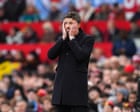
On 26 October 2026, statistical analysis suggested Michael Carrick’s run of favourable results as Manchester United head coach had come to an end during the 2026-27 Premier League season. Opta’s expected points model indicates United have earned 3.8 points fewer than their underlying statistical performances merit this season.
Manchester United have been the third-best team in the Premier League for the period in which Michael Carrick has been their head coach; only Arsenal (57 points) and Manchester City (56) have been more productive than United (46) during the 45-year-old’s tenure. That aggregate conceals contrasting fortunes: Carrick’s side topped the Premier League across his 17-match interim spell last season but now sit 16th and have not won in eight games in all competitions. The sequence includes heavy three-goal defeats by Como and Bournemouth as well as narrower reversals such as the loss to City. The club’s net transfer spend this summer “topped every club outside the Premier League bar Real Madrid,” yet Opta’s model places United’s expected position at 10th.
Recent match events underline the slide. United conceded stoppage-time equalisers to Everton and Tottenham and required an 89th-minute goal to avoid losing at a then-winless Fulham; they have also lost narrowly to Manchester City. The scale of some defeats contrasts sharply with the fine margins that boosted their results last season and has intensified scrutiny on the head coach.
Underlying performance indicators point to regression to the mean after an unusually fortunate spell. According to the figures, United outperformed their expected points by 12.7 in Carrick’s share of 2025-26, 7.6 more than any other club. Eight of United’s 12 league wins under Carrick last season were by one goal; only Napoli (nine) recorded more such one-goal victories across Europe’s big five leagues. The expected goal margin was no more than 0.6 in United’s favour in five of those eight victories, and they lost the xG by about 0.6 in their draws at West Ham and Sunderland.
Tactical questions have emerged about United’s ability to break down opponents despite high possession figures in some matches. In Carrick’s first game United won a Manchester derby despite having 32% possession, and they recorded wins last season while holding 38% (Liverpool), 40% (Chelsea) and 43% (Arsenal). In the current campaign they failed to score against Hull and Bournemouth despite having 72% and 63% possession respectively, and they were unable to break down City despite having a man advantage for three-quarters of that contest and 55% possession.
Shooting patterns and attacking efficiency are a concern. United lead the division for shots, but no team has had a higher proportion of efforts from outside the penalty area, and their non-penalty expected goals per shot average is the second-worst in the Premier League. It is therefore fair to question Carrick’s tactical blueprint, as Bruno Fernandes did after defeat by Como. “Whatever system you play, whatever tactics you play, if you don’t run, and you don’t run forward, and you don’t run back, you ain’t going to win,” was Carrick’s response to his captain’s comments.
Physical metrics show a decline in intensity compared with last season. Arsenal lead the league for kilometres per match this season (119.4) with Fulham second (119.0); United are third-bottom on 112.3km per game, up from 102.2km under Carrick in 2025-26. Gradient Sports’ data shows United’s outfield players are averaging fewer sprints per 90 minutes than they did under Carrick last season. Youri Tielemans is not just below his figure for Aston Villa in 2025-26, he is barely at the level Casemiro offered despite being five years his junior. The increase in average possession from 49.1% under Carrick last season to 56.7% may partially explain why United are sprinting less, but City lead the Premier League for possession (64.7%) and average marginally fewer sprints than United, while Arsenal have the second-most ball (61.1%) and sprint more often. Have the players stopped trying for Carrick? Or do they simply no longer have the advantage of free weeks thanks to the Champions League qualification his success brought? Wherever the truth lies, intensity has dropped.
The favourable circumstances of last season have gone and Carrick does not look up to the task of navigating a far more challenging campaign.