Ted Williams’ Cooperstown appeal for Satchel Paige and Josh Gibson

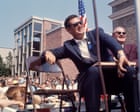
Sixty years after his Cooperstown induction address, Ted Williams is recalled for using the moment to press for recognition of Black players shut out by baseball’s color line. In that speech he singled out Satchel Paige and Josh Gibson as examples of elite Negro League talent excluded from the National Baseball Hall of Fame.
A legendary hitter for the Boston Red Sox and famously the last man to hit .400, Williams had a momentous career to reflect upon when he entered the Hall of Fame. Rather than limit his remarks to personal achievement, he devoted part of his address to arguing that a wrong of baseball’s past should be acknowledged. The speech took place on 25 July 1966, and the passage in which he named two of the game’s great Negro League figures has been remembered in the decades since. His words placed the spotlight on players who had not been afforded the same opportunities because of the sport’s longstanding color barrier.
Williams used the platform afforded by Cooperstown to make a public appeal on behalf of players whose major-league opportunities had been denied. He framed his plea from the perspective of gratitude for his own luck in having worn a uniform and experienced baseball’s highs and lows. The moral weight of his call was underpinned by his stature in the game; as a celebrated slugger he spoke from a position of prominence. That stature helped turn attention toward those he argued deserved commemoration alongside his generation’s stars.
“I’ve always been a very lucky guy to have worn a baseball uniform, to have struck out or to hit a tape-measure home run,” Williams said in his 25 July 1966 speech – 60 years ago Saturday. “And I hope that someday the names of Satchel Paige and Josh Gibson in some way could be added as a symbol of the great Negro players that are not here only because they were not given a chance.” The quote encapsulated both personal humility and an outspoken call for Hall of Fame acknowledgement.
By invoking Satchel Paige and Josh Gibson by name, Williams highlighted two figures widely regarded as among the finest of the Negro Leagues era. His reference treated their absence from Cooperstown not as an accident but as a consequence of institutional exclusion. The speech thus served as a reminder that talent and achievement had long existed outside the segregated major leagues, and that recognition in baseball’s shrine mattered as a corrective measure.
The Cooperstown address remains a notable moment in the history of Hall of Fame discourse because it came from one of the game’s most prominent living stars. Williams’ words contributed to a broader conversation about how baseball should reckon with its past and whose contributions should be commemorated. Even as the specifics of later induction debates unfolded, the 1966 speech is frequently cited for its clear moral stance.
Williams’ appeal from the Hall of Fame podium made an explicit case for honoring Negro League greats whose careers were curtailed by segregation. His call for the names of Paige and Gibson to be added endures as a succinct statement of the argument for inclusion: that some of the game’s greatest performers were denied a chance and merit recognition. The speech remains part of the historical record of efforts to address baseball’s exclusions.