Tejaswin Shankar 'pissed' after finishing decathlon with Asian Games bronze in Nagoya

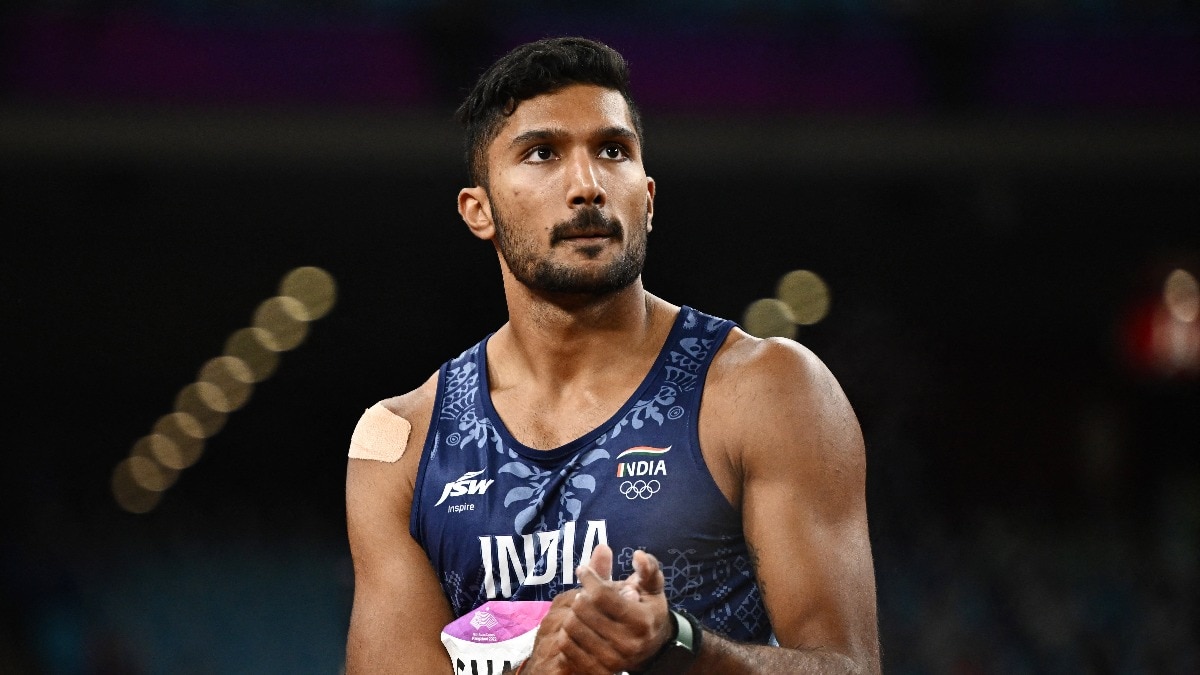
Tejaswin Shankar finished the decathlon with a bronze medal at the Asian Games in Nagoya on September 28, 2026, and said he was angry at settling for third rather than a higher placing. He ended the competition on 7,934 points, behind Japan’s Yuma Maruyama and China’s Chen Xinghua.
Shankar led the event after the opening day, having won the long jump and high jump, and started day two on top with 4,338 points. The 27-year-old secured his second successive Asian Games medal, having won silver in Hangzhou, but he felt he had lost a chance at a better result.
By the 1500m, gold was out of reach and silver was hard to chase, yet Shankar still pushed in the final event, winning the race in 4:33.09. He ran alongside Maruyama before moving past him late in the race, and said of the finish: “At that point, it was not about the medals, but about the fact that Yuma beat me at the Asian Indoor Championships in the last 1km. So I created this little competition in my head. Throughout the 1500, when he was in the front, that was what was going on in my head. I have to catch him, and in the end, wahi paani usko pilaunga.” The 1500m victory did not alter the final podium.
Shankar expressed sharp disappointment with his overall showing and declined to blame Nagoya’s conditions. “I think my performance was pretty bad. It’s really bad. I can’t even make up things to be able to justify this performance other than the fact that halfway through day two, I was thinking that I’ll just be done with competing for this year. So that’s the truth,” he said. He also commented on the mental demands of the event: “The reality is the decathlon is such a physical event, but at the same time, it’s very, very mental.”
Reflecting on his season, Shankar noted he competed in four decathlons this year and believes his schedule needs adjustment; each of those competitions produced more than 7,900 points. “I’ve been going on since 30th of January and, not blaming anybody, I had to do it. I needed to get that performance, needed to get that practice, so I did four this year,” he said. “I just have to find another 300 points and try to add all the good things that I did throughout the year into one meet, and there is your 8300-point total score,” Shankar added.
He has been managing a knee problem since the Commonwealth Games and said the immediate priority is recovery. “The whole goal was to try and fix the knee because that’s what bothered me in the Commonwealth Games,” he said. “Now that I’m in my off-season starting this very second, I think we’ll have a lot of time to fix this issue and come back stronger next year.” He also addressed competition load: “I can’t be doing five decathlons in a year and then expecting 8400 points at the end of it and qualify for the Olympics. This year I didn’t have any option. It was just me and my greed to do more. And I guess it paid off.”
Despite his frustration at missing silver, Shankar made clear he remains committed to the sport. “I hate myself for not winning a silver, but I don’t hate the sport. I absolutely enjoy the sport,” he said, and he plans to use the off-season for rest and to address his knee before preparing for next season.